
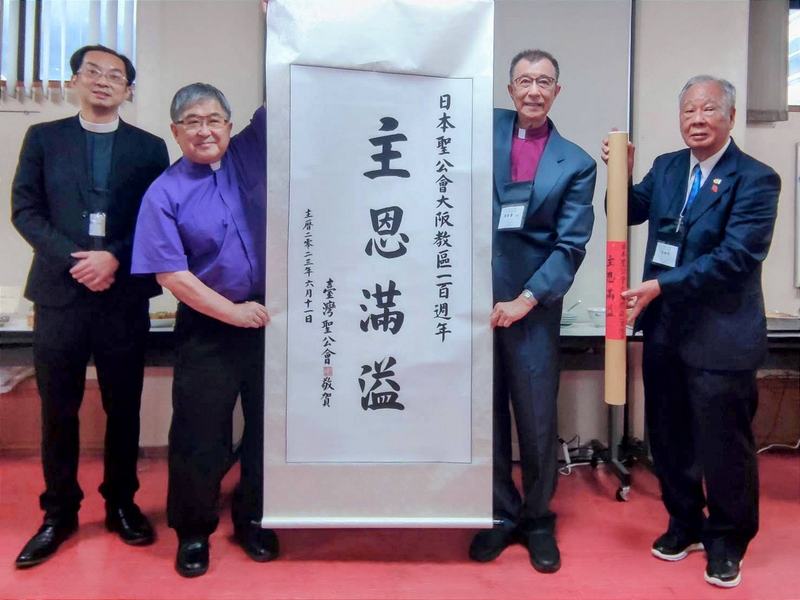
‘Overflowing with God’s Grace’ 主恩滿溢 (Zhǔ ēn mǎn yì) was the most appropriate and beautiful phrase for a scroll of Chinese calligraphy, written by Mr. Tian-Jian Chang 張天健 and presented by the Bishop of Taiwan, Lennon Yuan-Rung Chang to the Bishop of Osaka, Andrew Haruhisa Iso to celebrate the Diocese of Osaka’s centenary on Sunday, June 11, 2023. I was honoured to be included in the group of 24 from the Diocese of Taiwan who traveled to Osaka with Bishop Chang for the occasion. Thanks be to God, yes!
The history of the Anglican / Episcopal Church in Taiwan goes back to the Japanese colonial era, 1895-1945, when the Japanese Anglican Church (Nippon Sei Ko Kai, NSKK) owned church buildings in Taiwan and held services for their own Japanese citizens. Taiwan was then administered as part of the Diocese of Osaka, which was officially established in 1923 with the consecration of its first Japanese bishop, Bishop Yasutaro Naide. After the Japanese left Taiwan in 1945, most of their Anglican Church buildings were taken by the Nationalist government in Taiwan and given to other denominations. The Taiwan Episcopal Church was established in 1954, and Taiwan and Osaka reconnected in 2004, when the two dioceses signed a companion diocese agreement, renewable every three years, which actively continues to the present day. Most recently, Bishop Iso led a group from Osaka to attend Bishop Chang’s consecration as bishop in February 2020, but a proposed visit by Bishop Chang to attend the celebrations of the 150th anniversary of the cathedral in Osaka in 2020 had to be canceled due to the pandemic – actually it was delayed a year and then held online instead. This visit to Osaka for their centenary celebrations was the first in-person contact since before the pandemic, and for many in our group, it was their first visit to the Diocese of Osaka. Mine too!

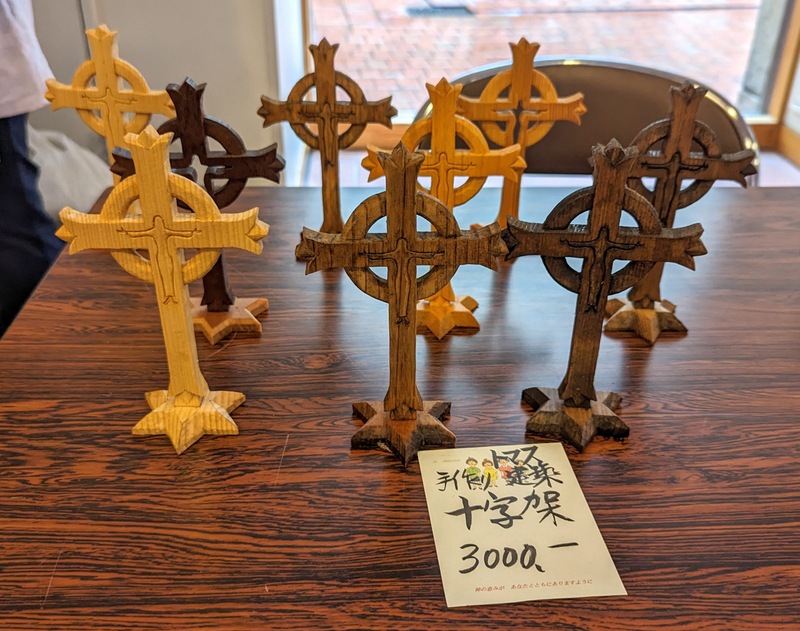
As a CMS (Church Mission Society) mission partner in Taiwan since 1999, my time overlapped with the last of the long-term CMS-UK mission partners serving in Osaka, Rev. Pam Cooper and Ms. Evelyn Wroe. I visited them when they were on holiday in Karuizawa, up in the mountains not far from Tokyo, and also in their retirement in York, and Pam came once to visit me here in Taiwan. Both were teachers at Poole Gakuin School, Osaka, then Pam became chaplain and went on to be ordained in 2004, the first woman priest in the Diocese of Osaka. Pam served in Osaka with CMS for over 40 years, from 1968 to 2008, and when she died during the pandemic, the Diocese of Osaka held a Memorial Service in thanksgiving for her life and ministry. Pam’s good friend, Rev. Kiyomi Semmatsu, became Osaka’s first Japanese woman priest and she was on hand this time to lead us around, she’s also on the committee that oversees our companion diocesan partnership. We all love her very much! One of her church members had made some special crosses for sale in aid of church funds, so we were delighted to buy them – and she delivered them to us in person, thank you!

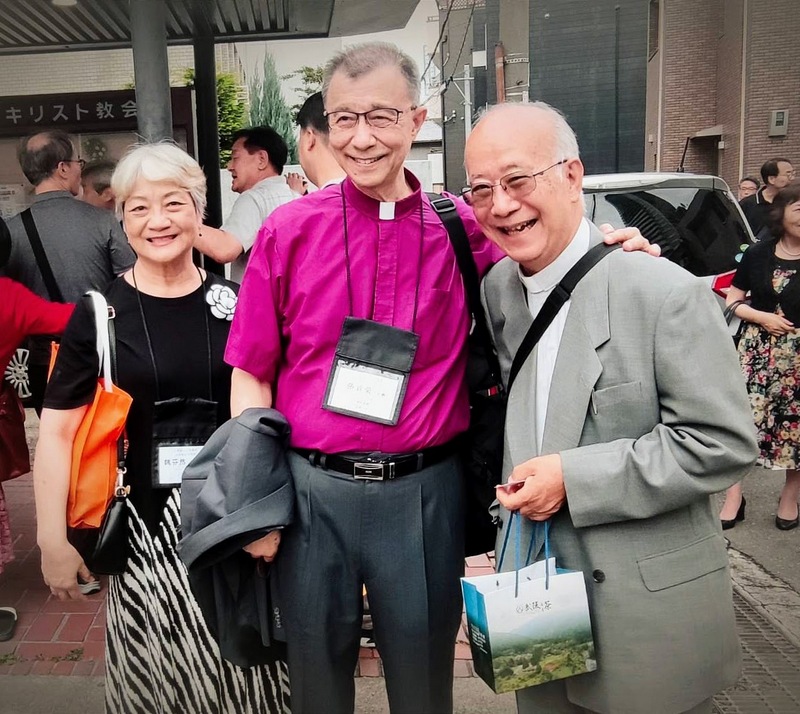
Pam also knew Rev. Elizabeth Wei, Taiwan’s first woman priest, who happens to be the older sister of Bishop Chang’s wife, Hannah. Elizabeth is very popular in Osaka, and our good friend, Rev. Akira Iwaki, retired dean of the cathedral in Osaka, mentioned Elizabeth’s name immediately on greeting Bishop Chang and Hannah, shown in the photos below. Ah, we were so pleased to see him again!

Although I had never visited Osaka myself, whenever groups from the Diocese of Osaka visited Taiwan, their clergy would remind me that Osaka was historically a CMS diocese, and how strong that link was. So, with this connection in mind, I offered to Bishop Chang and then to Bishop Iso to also represent CMS at the centenary celebrations in Osaka. Canon Andy Roberts, CMS-UK Mission Director in Oxford sent me a letter of congratulations to present to Bishop Iso, and I also took some gifts. Mr. Xavier Chao, a member of our St. John’s Cathedral, Taipei, runs a small business importing and selling church supplies, mainly from Eastern Europe. A few weeks ago, I saw that he was running a workshop making Anglican prayer bracelet rosaries with our cathedral young people’s group, so I asked him to make me some using Taiwan indigenous beads – he used beads of the Paiwan Tribe. They are beautiful! I took 20 of these to give to all the active diocesan Osaka clergy, plus some for retired clergy, symbolizing the essence of our companion diocesan relationship as one of praying for each other. Here I am presenting them to Bishop Iso and his wife…


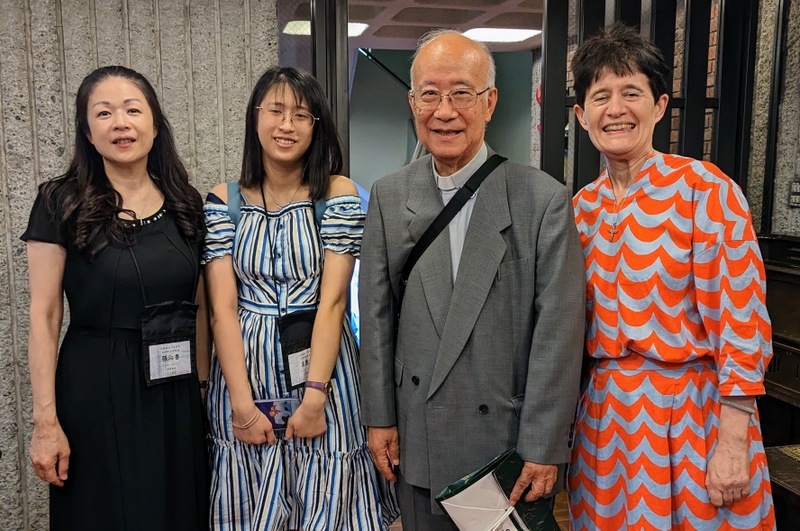
Our archdeacon, Rev. Keith C. C. Lee from Good Shepherd Church, Taipei was the key person in the Diocese of Taiwan responsible for organizing this visit, and also our main translator and contact person with the Diocese of Osaka. It was not easy to arrange such a visit, particularly with the pandemic situation fluctuating from month to month. Although all pandemic restrictions have been lifted in both Japan and Taiwan in the last few months, we were careful – and happy to abide by the request to wear facemasks for the centenary service. Facemasks are still in common use on the streets of Osaka, as they are in Taiwan. Still, some in our group were still recovering from having had covid the week before we went to Osaka, and a few were feeling a little unwell towards the end of our trip as symptoms presented themselves, so not surprisingly several people did test positive on our return to Taiwan. All things considered, given the ever-uncertain circumstances of the pandemic, everything went really well, and we are all grateful to Keith and the others in the team for doing an amazing job! We were invited to sing our companion diocesan hymn, ‘Tomoni’ (meaning ‘Together’) during our visit, and he was the one who got us all practising beforehand, and generally kept us all going for the duration of the trip. Thank you Keith! Keith appears in the photos below with Bishop Iso, and the lady on the far right is Ayano Tsuji, who wrote the Tomoni hymn.


Our group from the Diocese of Taiwan were from all different churches in the diocese, including 5 from St. James’ Church, Taichung, 2 from St. Timothy’s Church, Kaohsiung, several from Christ Church, Chungli and a large contingent from St. John’s Cathedral. Mr. Yun-Hung Di from St. Paul’s Church, Kaohsiung, and also the leader of the evergreen (seniors) diocesan committee, was responsible for organizing the calligraphy scroll and he faithfully carried it from south Taiwan to the airport, then all round Osaka before presenting it to Bishop Iso. Mr. Di celebrated his 77th birthday on June 11, the day of the centenary celebrations, so at the party in the evening, we also sang Happy Birthday to him. This is Mr. Di (below right) with Bishop Chang’s wife, Hannah and one of our Osaka friends proudly displaying his bag from St. James’ Church, Taichung, a gift from a previous visit to Taiwan. He came over especially to show us and say hello!

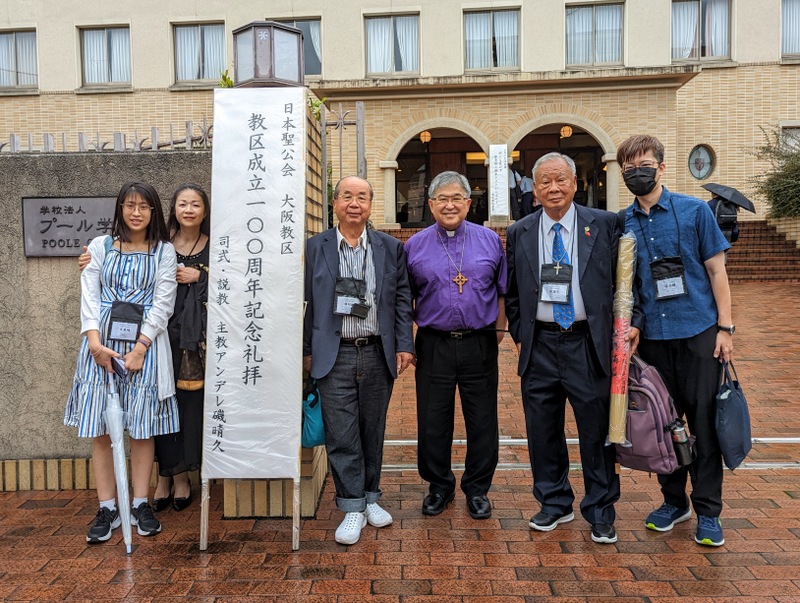
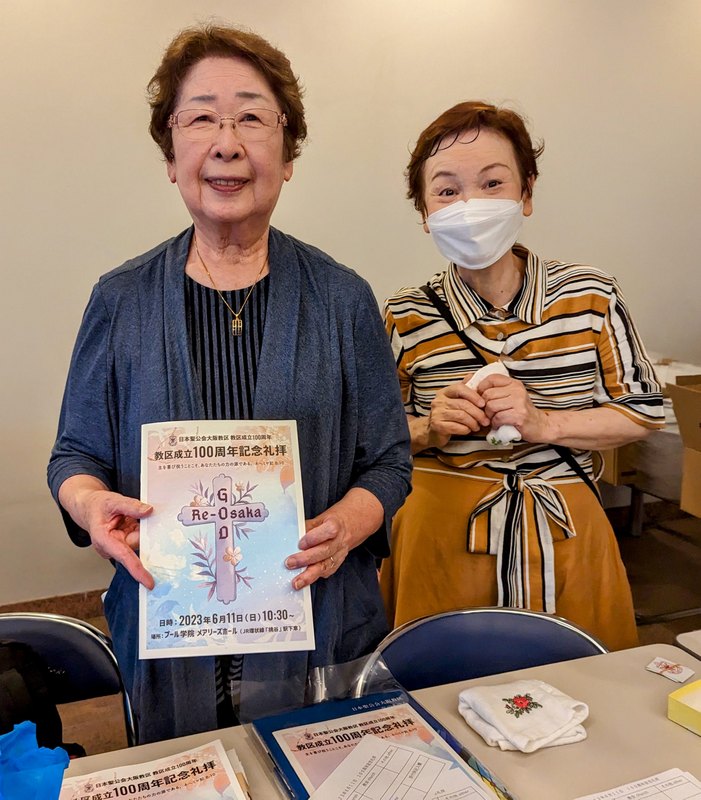
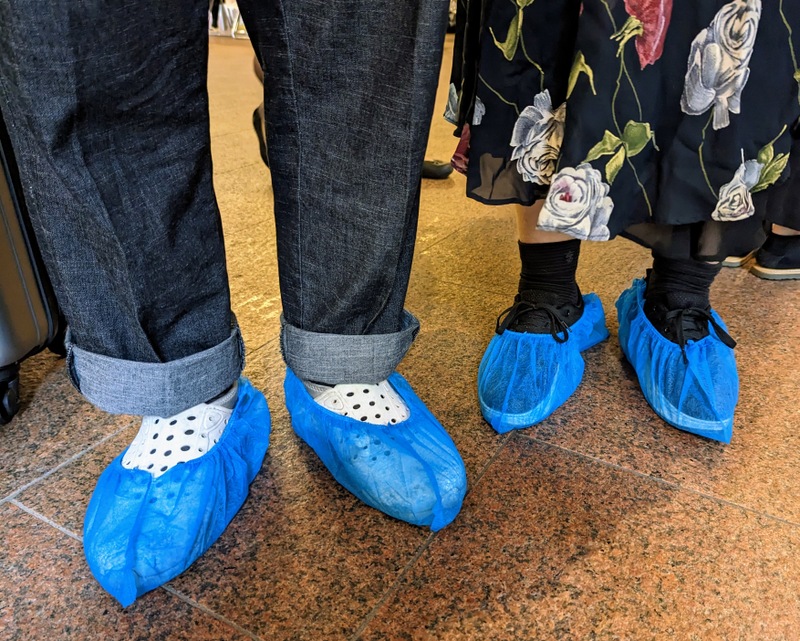
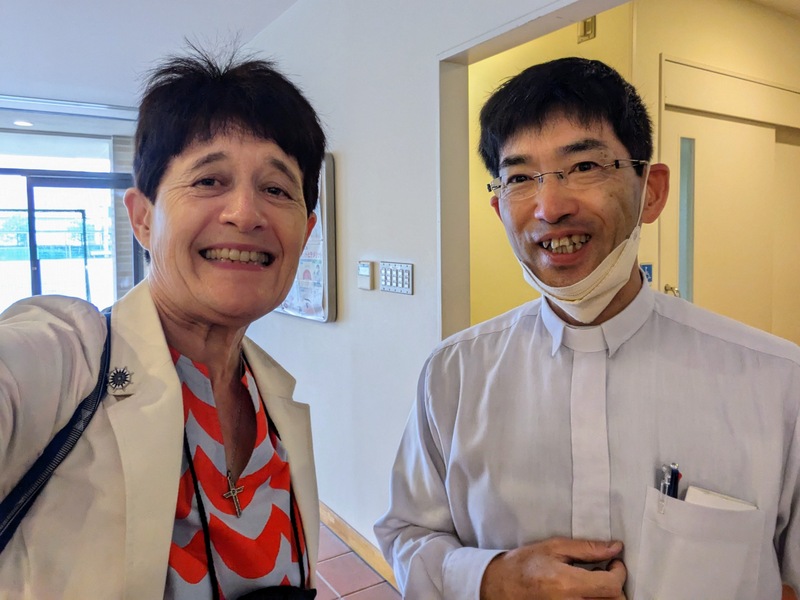
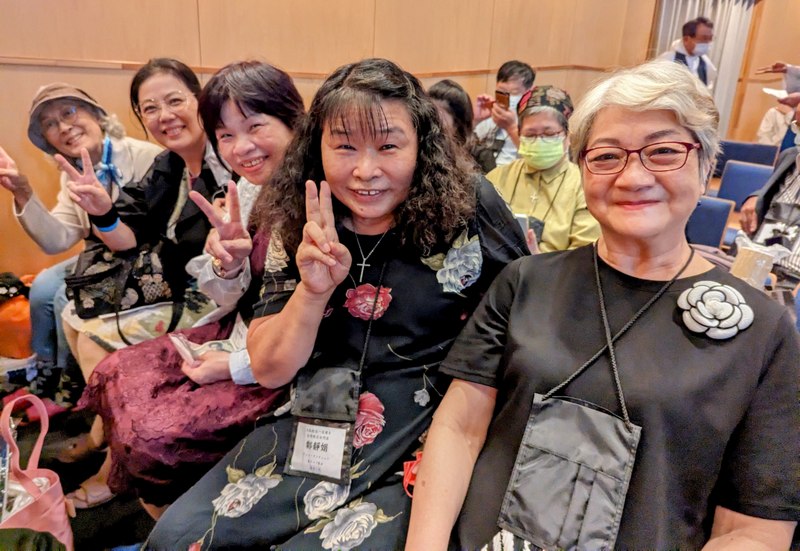
The centenary celebrations took place at Poole Gakuin School, Osaka on Sunday June 11, and as the main auditorium is carpeted, so everyone was asked to wear slippers on their feet. Many of us took our own, the alternative being to wear blue plastic shoe covers. This was quite a new experience for us from Taiwan, although we usually take our shoes off at home or maybe in classrooms with polished wooden floors, we rarely would take them off for such a major formal event. It really made us smile to see everyone dressed so formally, the men in suits, most of the women in skirts, and all wearing slippers or bright blue plastic shoe covers! We arrived nice and early – in the drizzle – to be warmly welcomed at the main entrance by Bishop Iso…






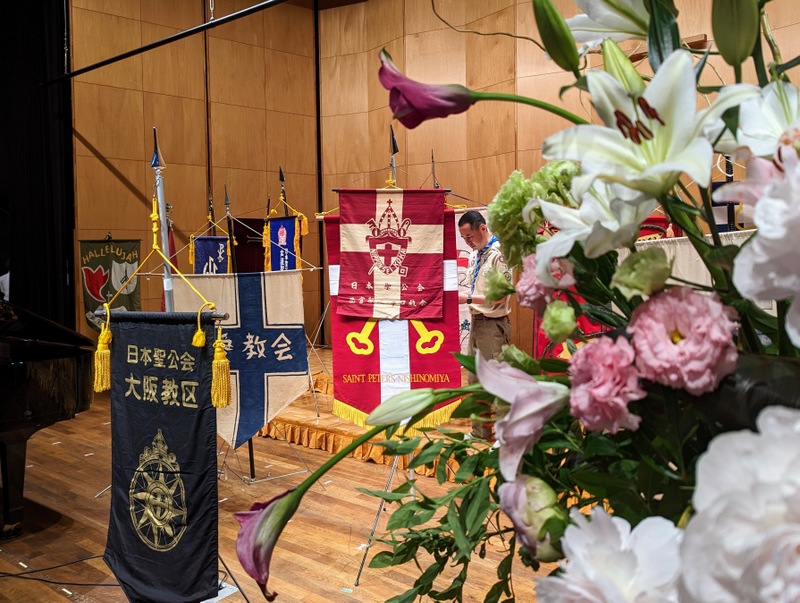
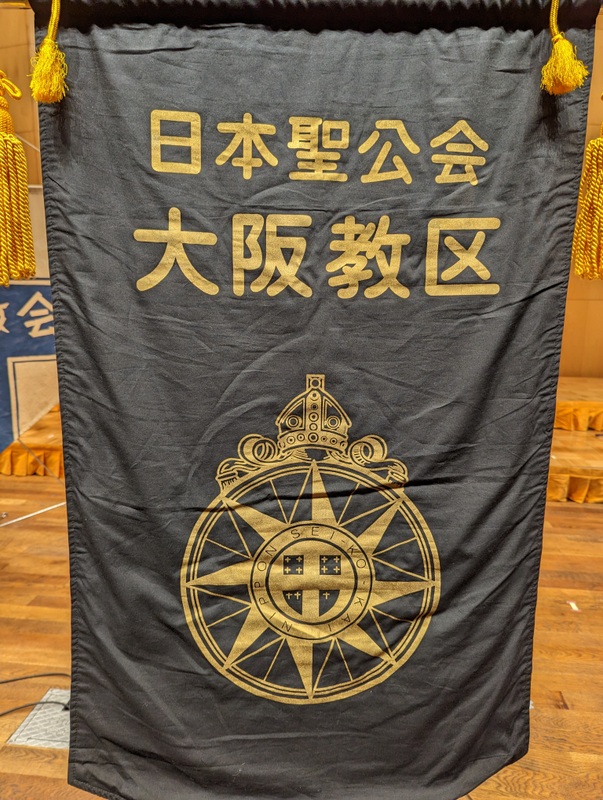


This is the YouTube live stream of the centenary Thanksgiving Service…
There were 4 bishops in attendance, including the Primate, Luke Ken-ichi Muto, who is also Bishop of Kyushu, Bishop Osamu Onishi, retired bishop of Osaka, Bishop Iso and Bishop Chang. Their name tags were stuck on their chairs…

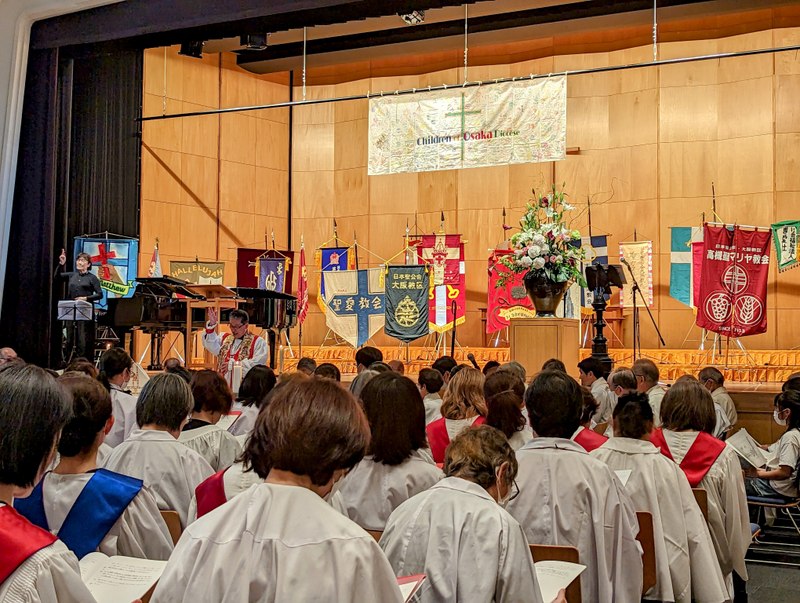
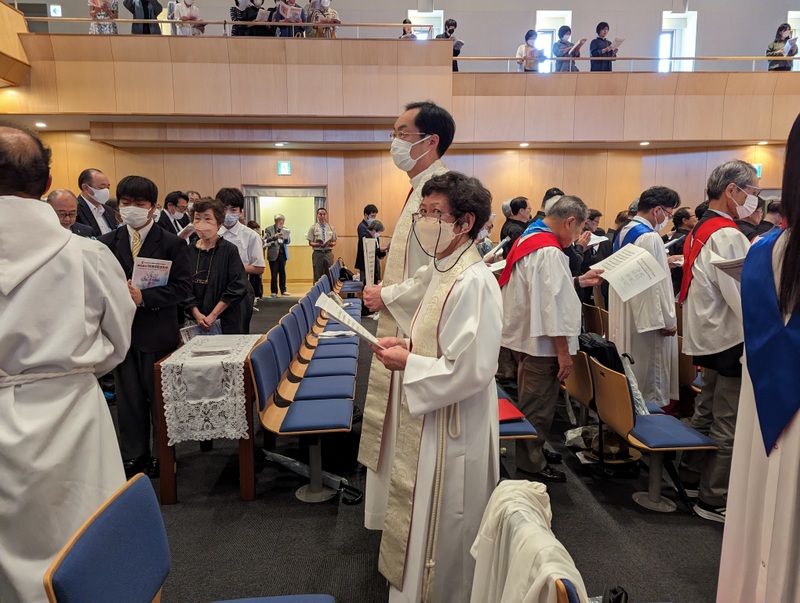
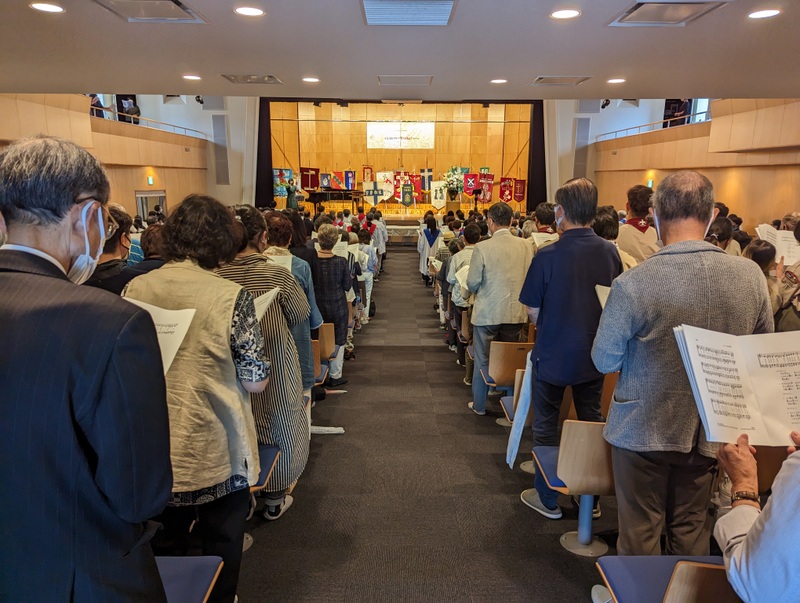
The school auditorium’s main hall was full, as church services across the Diocese of Osaka had all been cancelled that day, and everyone was invited to attend the centenary celebration service instead. The main part of the hall was filled with a diocesan choir gathered from all different churches across Osaka, mostly dressed in white choir robes, while a group dressed all in black were a male voice choir from the Diocese of Seoul, Korea who had come for the celebrations. Bishop Iso preached, the choirs sang, everyone was introduced, and we all took Holy Communion. It was a wonderful service!
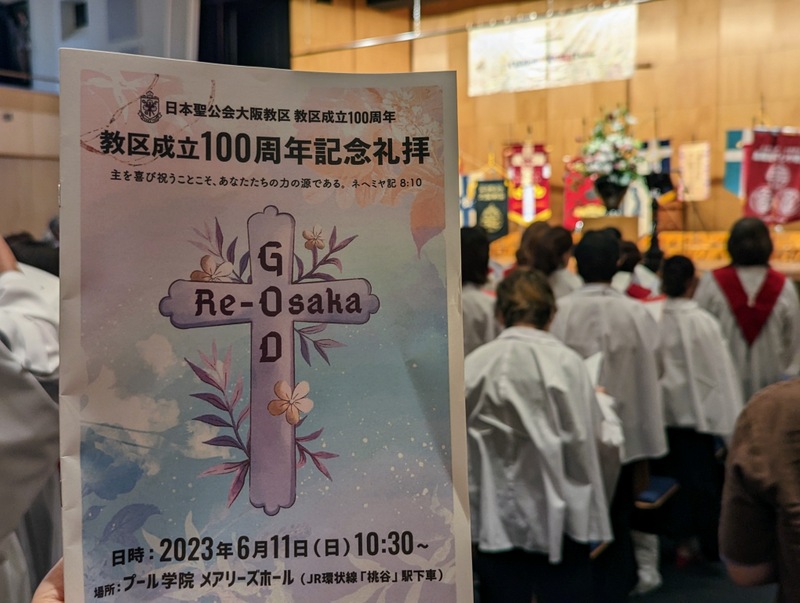


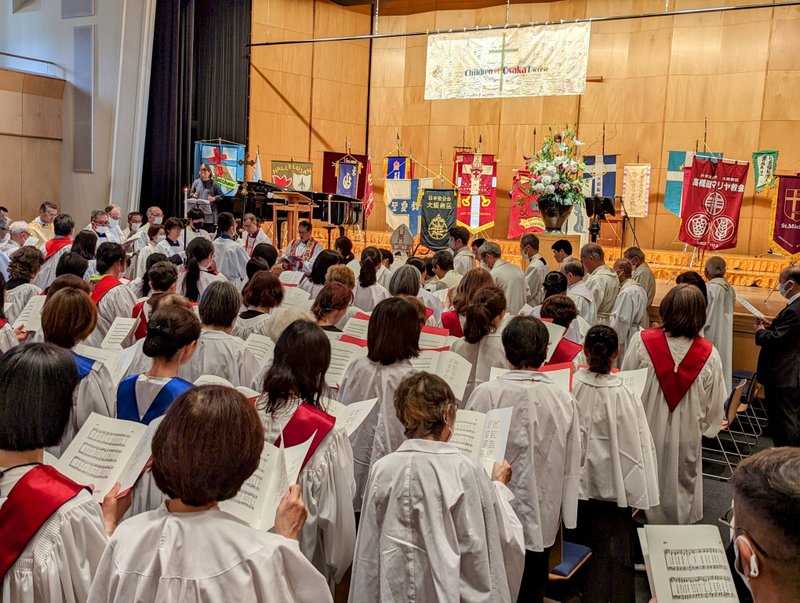

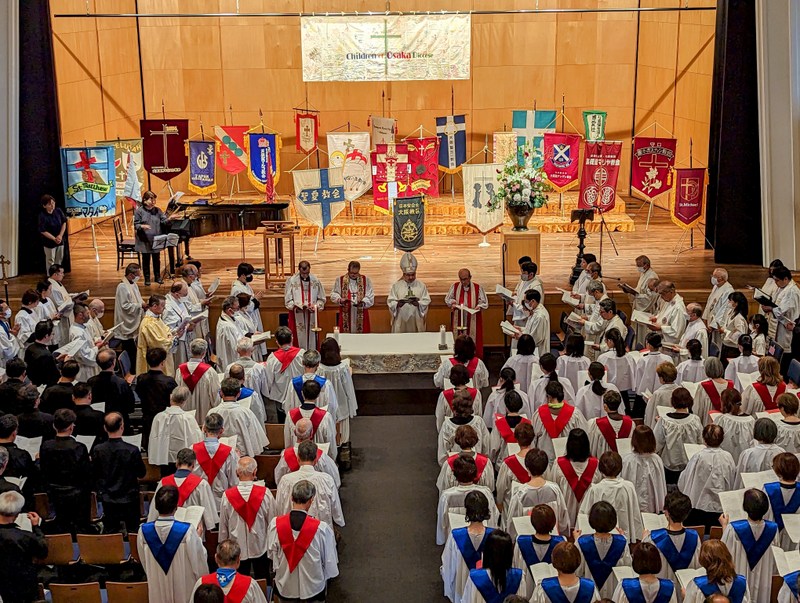
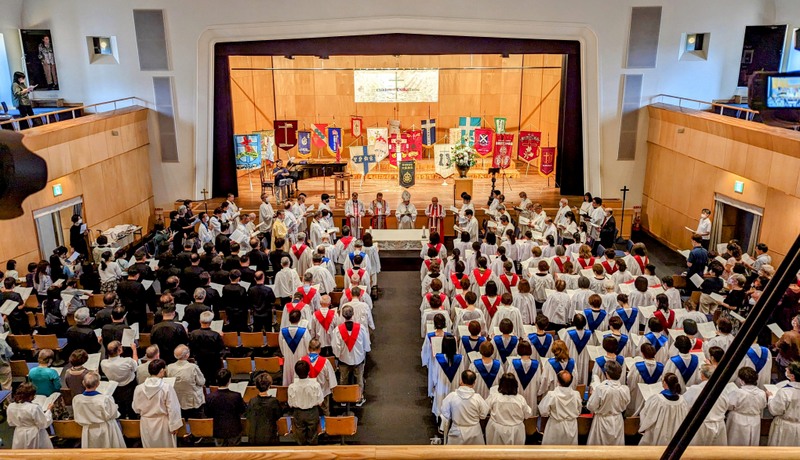

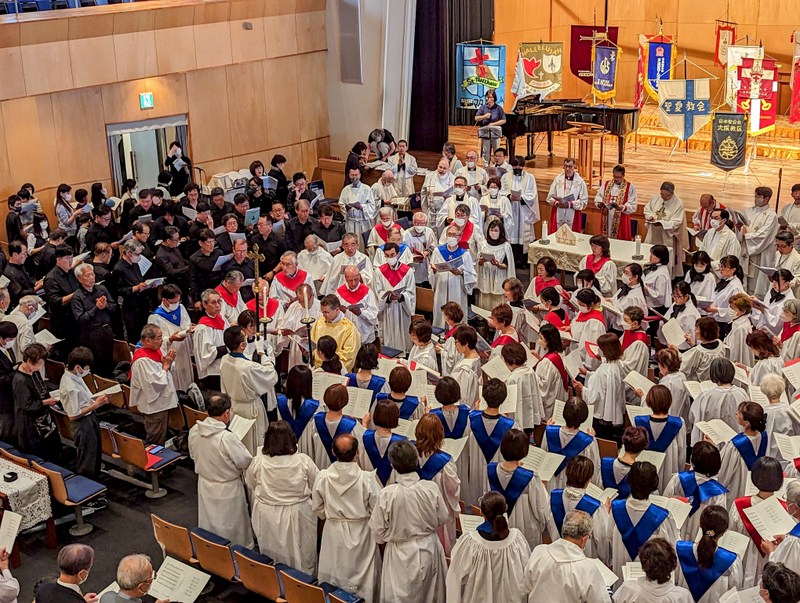

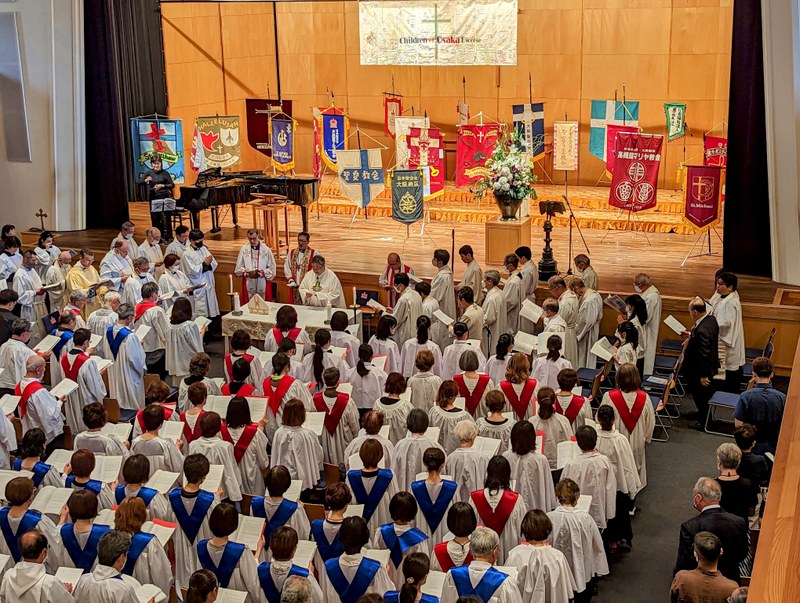



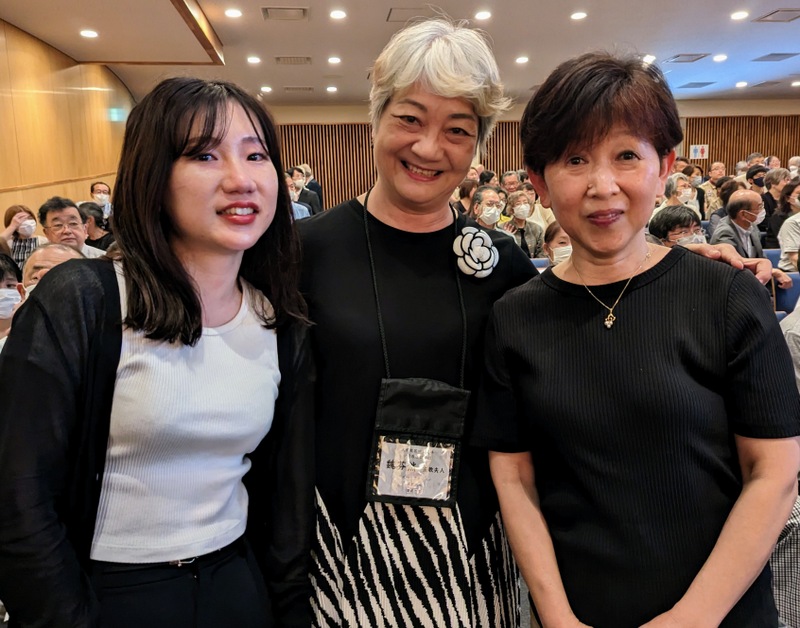
One of the people we met after the service from Osaka was Megumi, who had attended our Taiwan & Osaka joint mission program a few years ago, it involved 3 consecutive years of mission training and outreach in Taiwan, Osaka and West Malaysia. It was lovely to see her and her Mum, here they are with Hannah…
After the service, everyone went to the main school canteen for lunch. I met Bishop Onishi, who had visited Taiwan many times when he was Bishop of Osaka. We exchanged greetings to and from our retired bishop, Bishop David J. H. Lai.

And I was pleased to meet up also the Rev. Hiroaki Francesco Naruoka, chaplain at Poole Gakuin, and also priest in charge of the nearby Jonan Christ Church. He was very busy making announcements at the celebration service and hosted the evening event at his church. Thank you for your warm welcome to Jonam Christ Church!
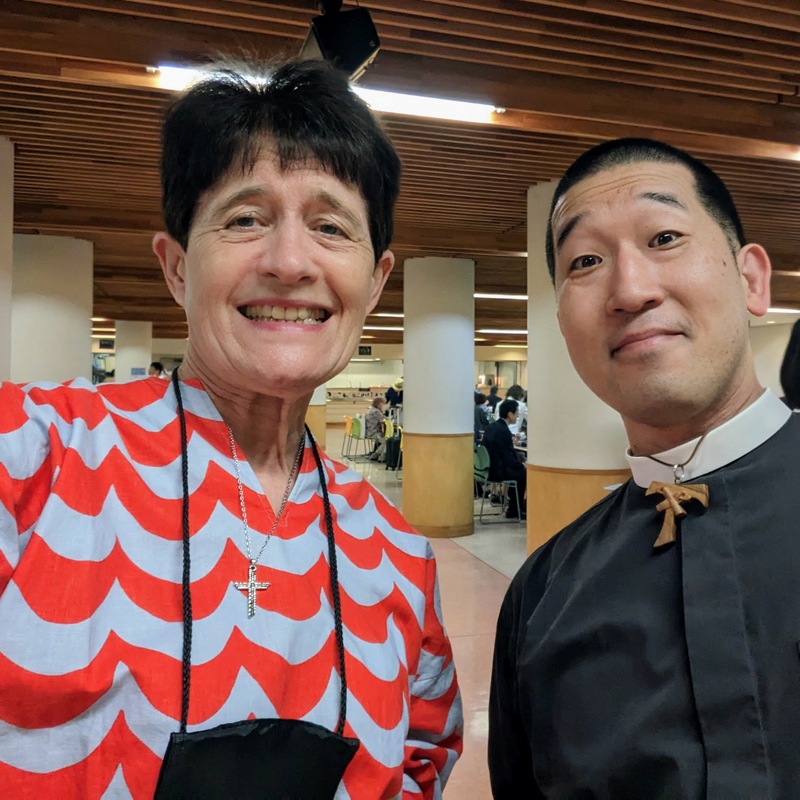
At 2:00 pm that afternoon, there was a special centenary concert, featuring the Diocese of Seoul Male Voice Choir, with the Osaka diocesan choir also singing too. It was lovely! At the very end, our group also got up on stage and sang the Tomoni hymn. Check out the YouTube video below…

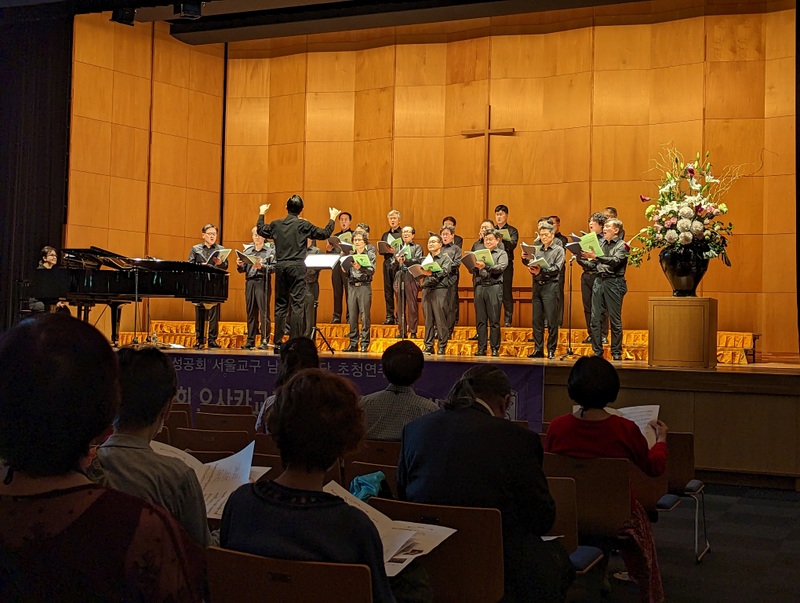
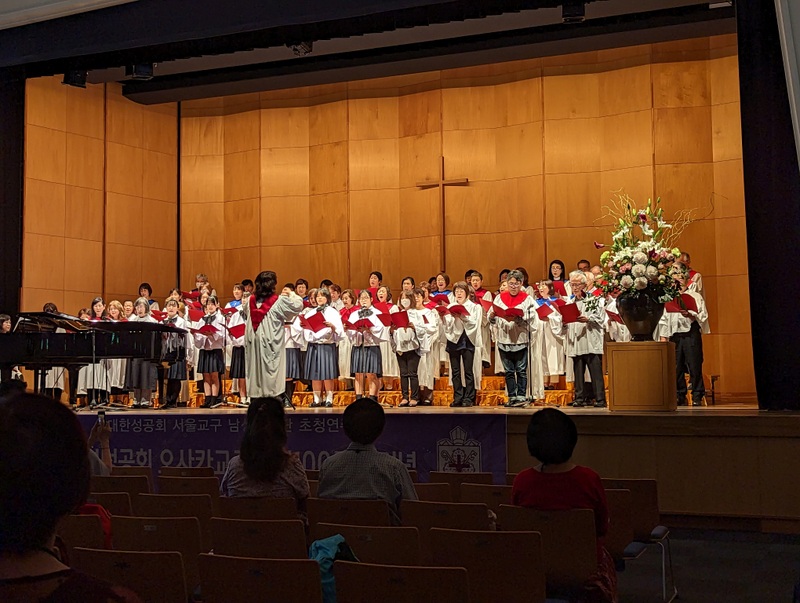
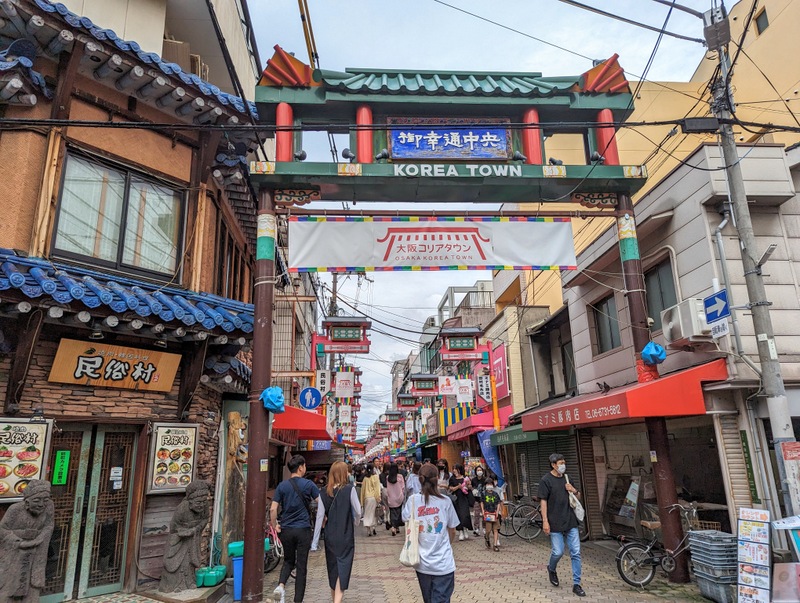
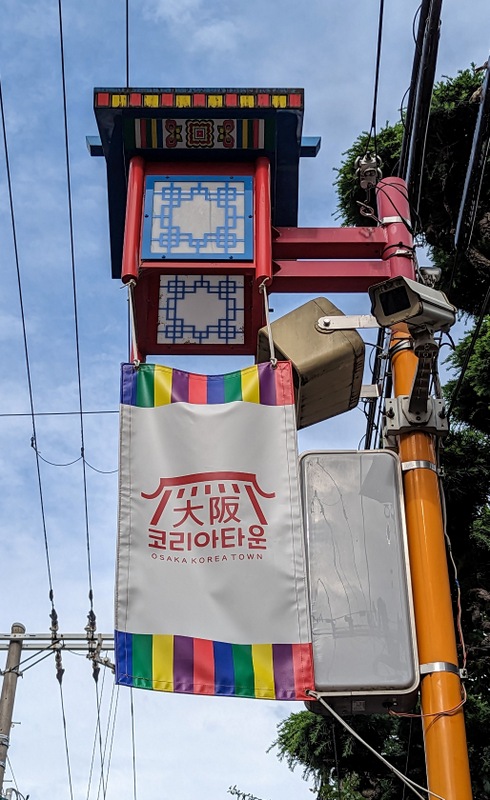
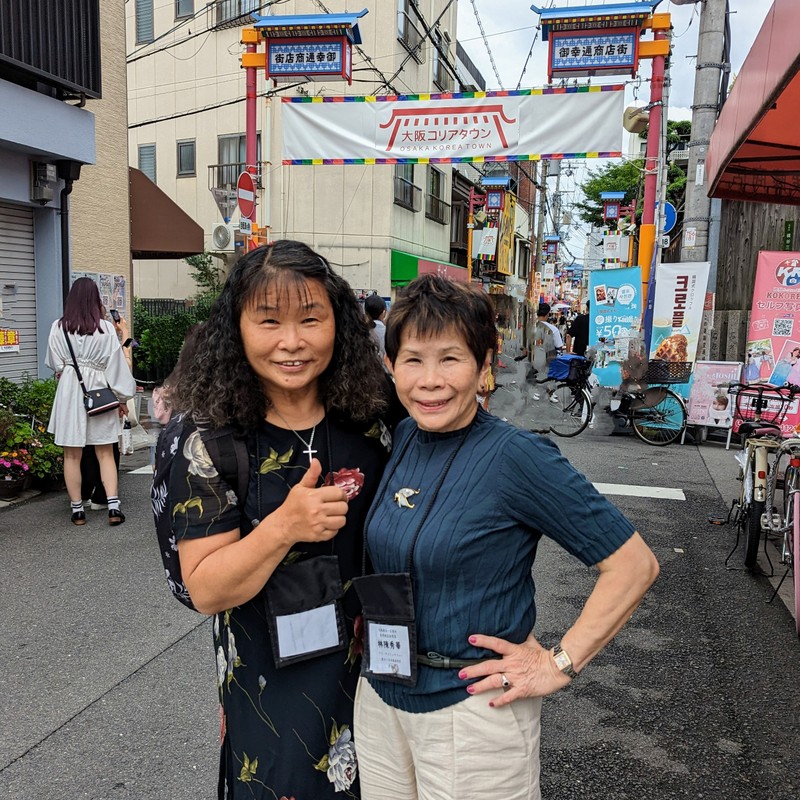
After the concert, so we were heading on foot to nearby Jonam Christ Church for the evening event, but with a bit of spare time, Rev. Kiyomi took us via Korea Town. It’s a very colorful and lively place, and the ice cream was good, as always – Japanese ice cream, especially from Hokkaido is the world’s best! It turns out that, sadly, the Korean community in Japan faces a lot of discrimination and persecution from the Japanese government, and knowing how to support them is a big challenge for all those who seek to work for justice and peace.






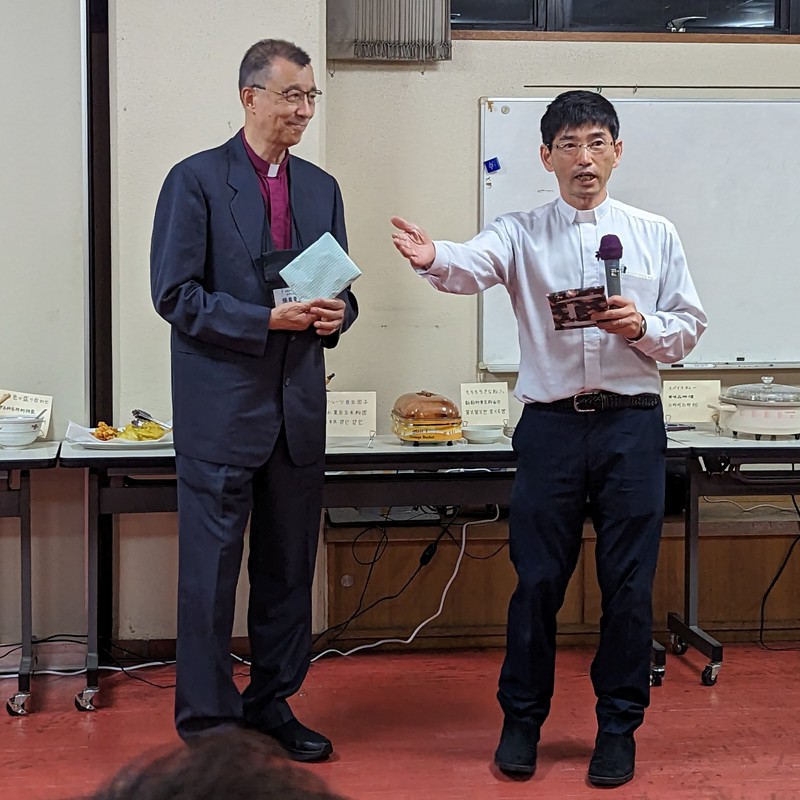
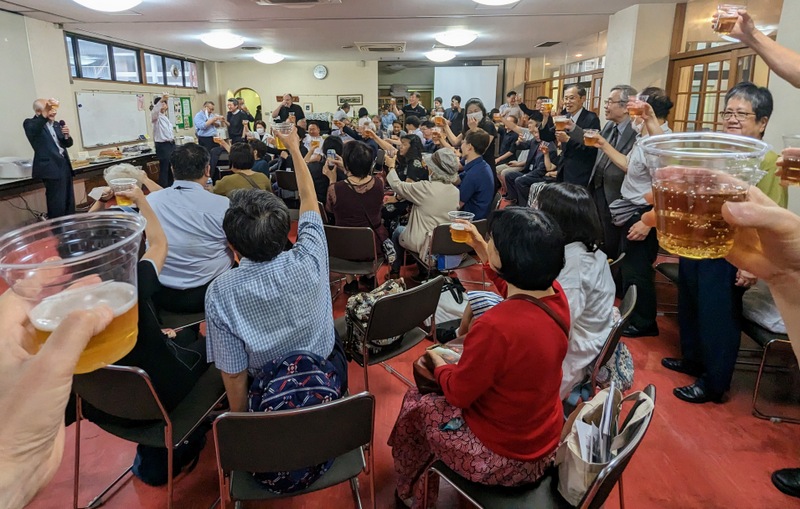
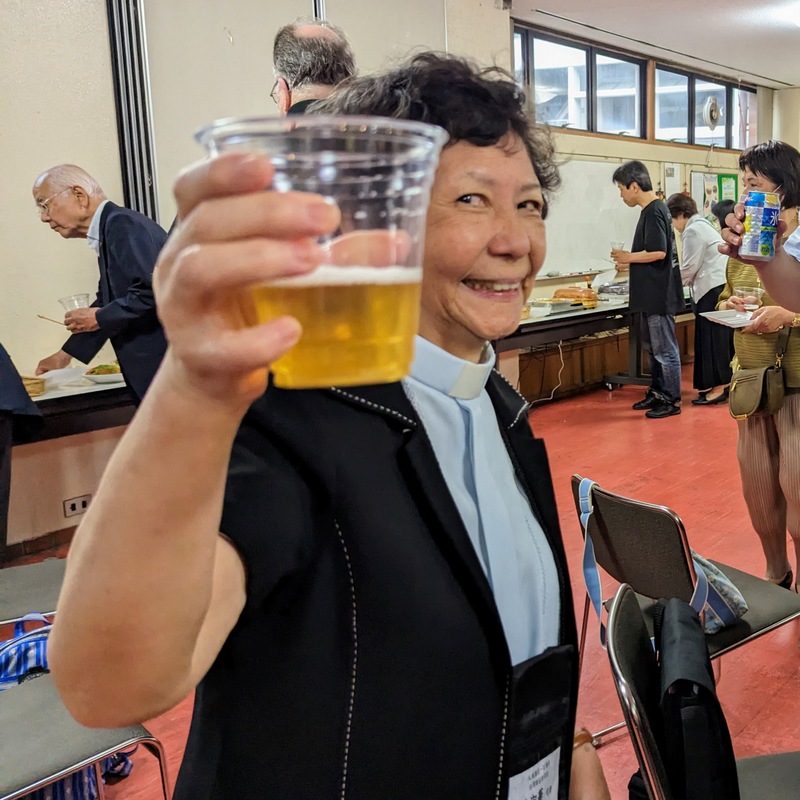
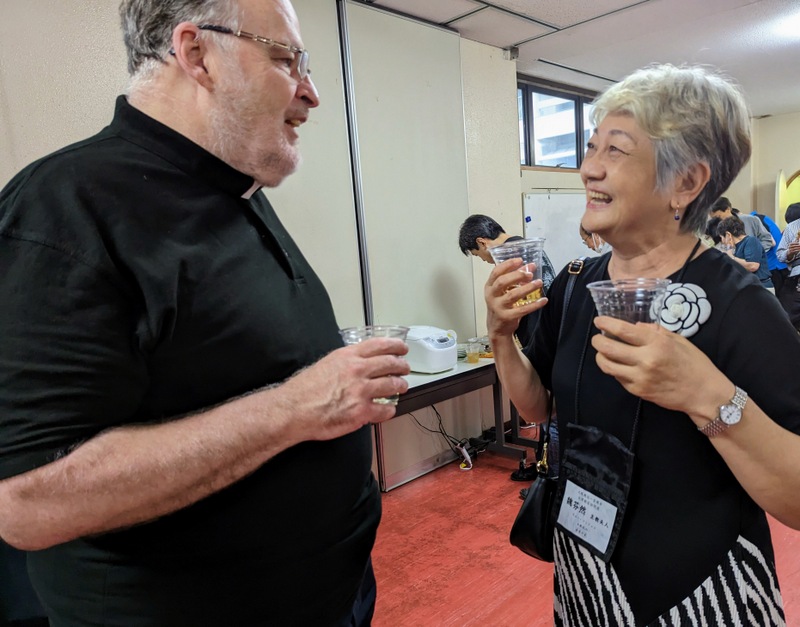
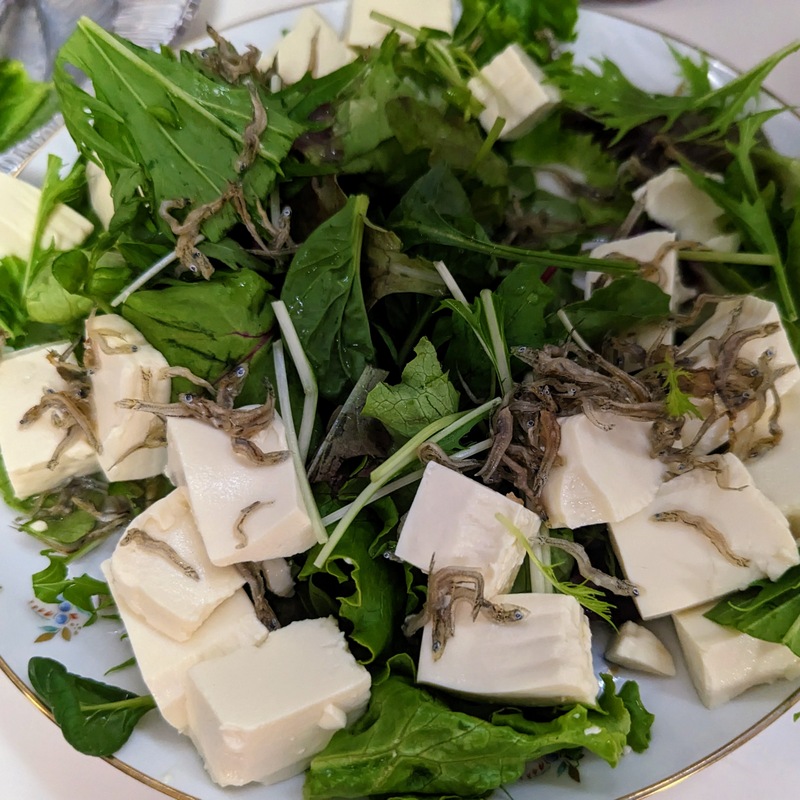
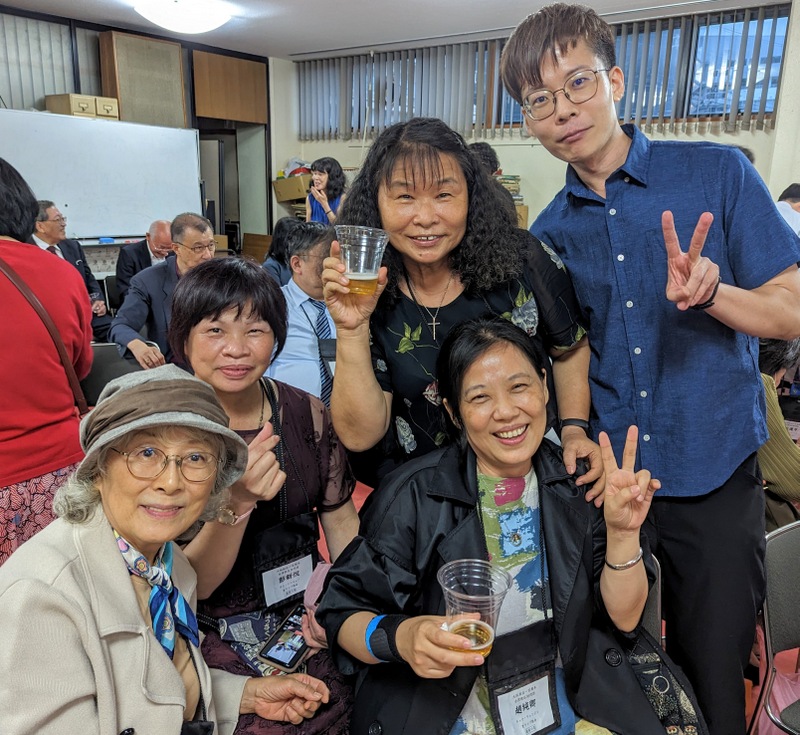
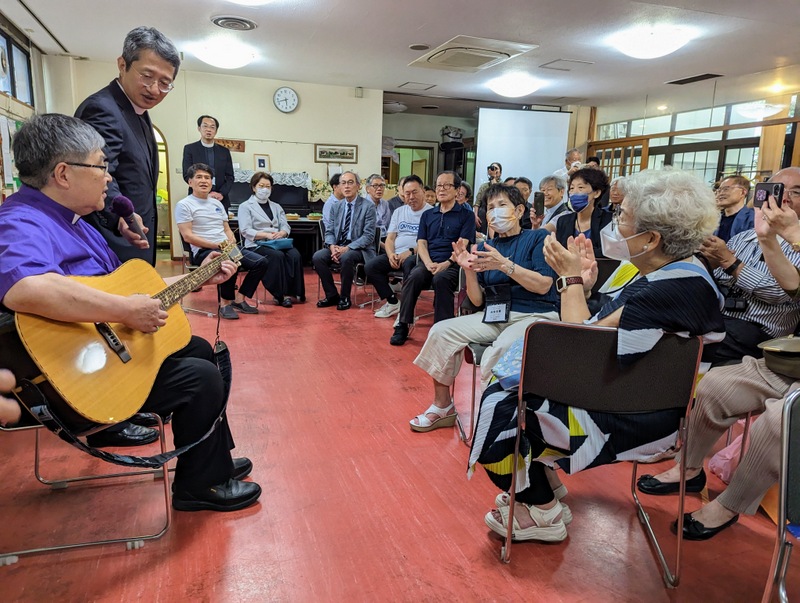
By late afternoon we had arrived at Jonan Church, and the festivities began ~ a welcome party for the Seoul choir, us and many clergy and visitors. It was here that Bishop Chang presented the scroll and I made a short speech (thanks to Rev. Warren Wilson for translation), we had a toast, prayers, delicious food and great entertainment, much of it spontaneous. It was warm and welcoming, and we really enjoyed it all!












The following morning, Monday, our group divided into three and we went to visit different churches in the Diocese of Osaka. One group went to Holy Redeemer Church, where the church runs a social welfare institution for disadvantaged families, children and the elderly, called Hakuaisha. Another group went to St. Augustine’s Church, Moriguchi, which offers help to disadvantaged families. All returned very moved by what they had seen and heard. Our group went to visit the cathedral, where we were escorted on the bus by Rev. Warren Wilson (who had translated for me the night before), he is originally from Canada but his wife is Japanese and he’s been living in Osaka for many years. On arrival at the cathedral, we were warmly welcomed by the dean, Rev. Sikyung Yoo and his wife, both Korean, and both had visited us in Taiwan some years ago. The Osaka and Seoul cathedrals have a special sister cathedral partnership, and it was through this link that the Seoul choir came for the Osaka centenary celebrations. We also met some of the church members, including Mr. Shoji Hoshino. Here are Rev. Yoo (left) and Mr. Hoshino (right) with a scroll given by our Bishop Lai on a previous visit of the Diocese of Taiwan to Osaka.

The Osaka Anglican Cathedral is known as ‘Kawaguchi Christ Church‘, named after Kawaguchi 川口 (lit. river mouth), the area of Osaka where it is located; and it all just oozes with history! After being isolated from the world for 200 years and with Christianity banned throughout that time, Japan started to open up in the mid-1850s. Foreigners were allowed to settle and do business but restricted to certain areas of certain cities, in the case of Osaka to the Kawaguchi Foreign Settlement 川口居留地. Yes, as its name suggests, it’s located on an island at the mouth of the river, from where access could be strictly controlled. In the early days of the Kawaguchi Foreign Settlement, although the government ban on Christianity continued, Christian missionaries were permitted to settle there, where many started schools, hospitals, and orphanages. The foreign settlement marker is right near the cathedral today.

In the photo below, Rev. Yoo is pointing out the location of the cathedral in the Kawaguchi Foreign Settlement, by the river …

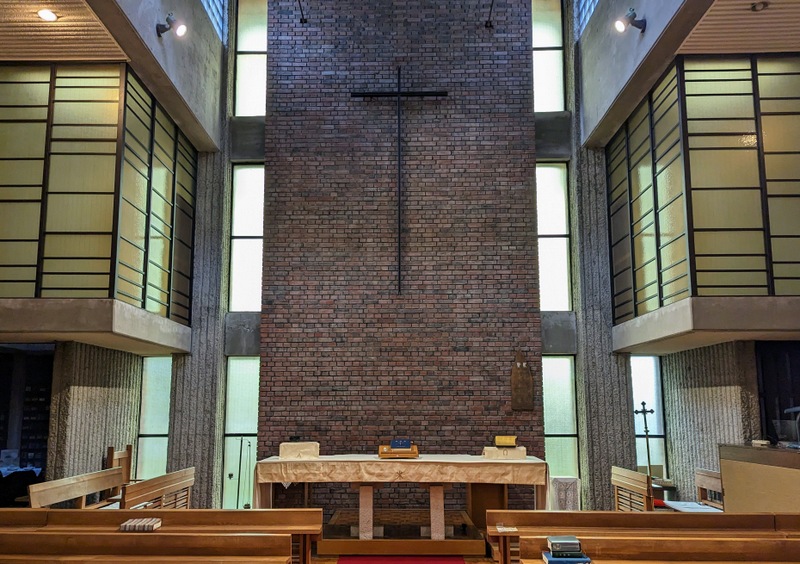
With the opening up of Japan to foreigners, Bishop Channing Moore Williams, an Episcopal Church missionary (and later bishop) from the USA arrived in Nagasaki in 1859, then moved to Osaka in 1869, and in 1870 established a chapel, and later an English school, teaching the children of the Samurai – Rev. Yoo told us they would sharpen their pencils on their samurai swords! That school developed into what are now eight church schools in Japan (including Poole Gakuin, St. Andrew’s University, and Rikkyo University) and there is a new plaque marking the site as ‘Osaka’s Birthplace of Modern Education”. The present ‘Kawaguchi Christ Church Cathedral’ building was built in 1920.

In March 1945, during World War II, the roof of the cathedral was destroyed by American air raids, but Rev. Yoo told us that the damage would have been far worse if the priest hadn’t gone up on the roof, assisted by some of the Chinese living in the area, and kicked off the burning roof embers so that they didn’t fall into the nave below. The other major disaster was the Great Hanshin Earthquake on January 17, 1995, when the cathedral tower collapsed and the building suffered great damage. Amazingly, the side wall of beautiful stained glass windows and the German-made pipe organ, all of which had been installed only a few years previously, all survived intact in the earthquake….
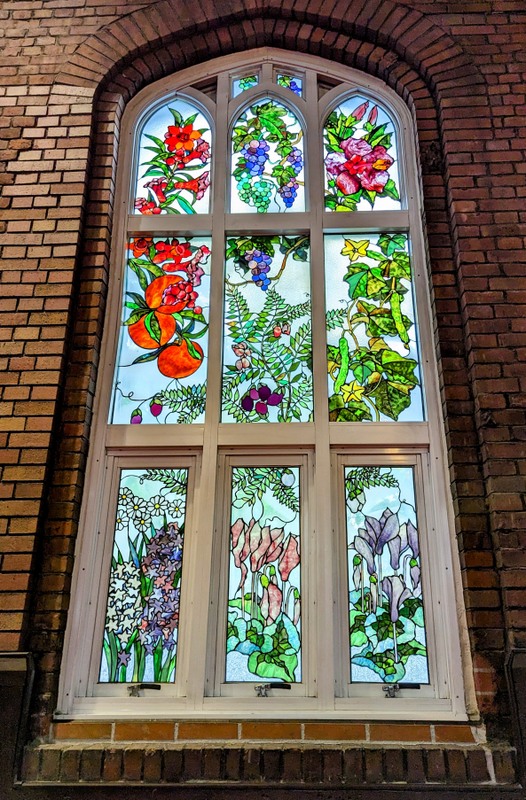

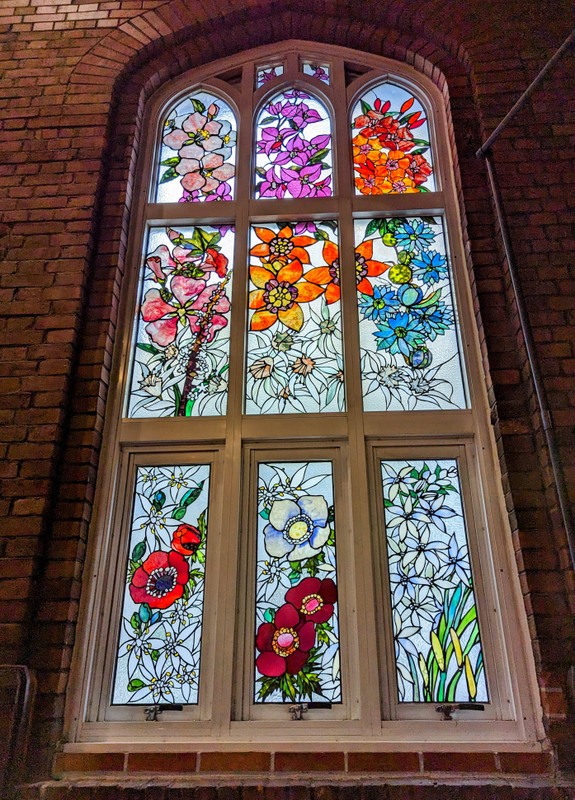
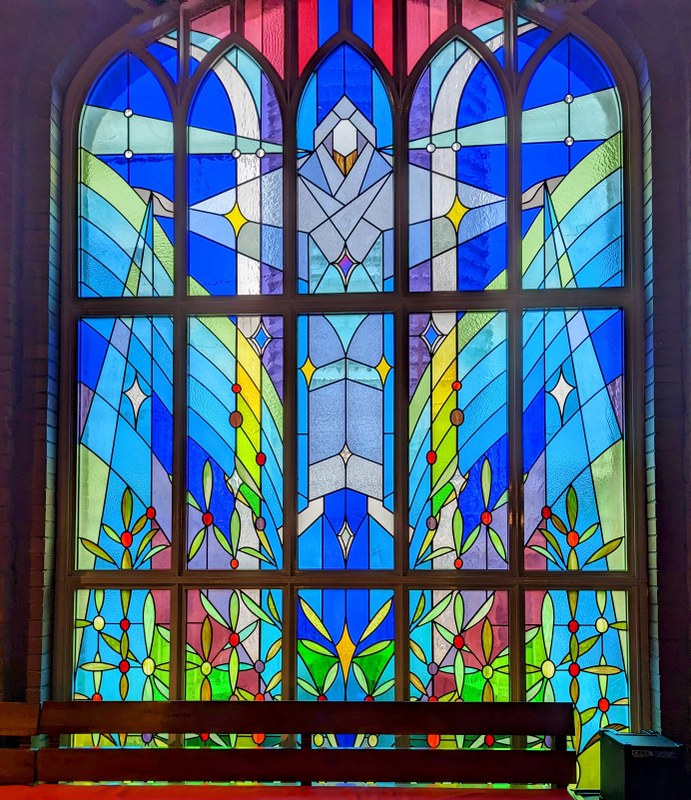
The tower was rebuilt, the building strengthened and all restored to its former glory a few years later. A new window (photo below) is in the tower wall over the balcony. I love the colours!
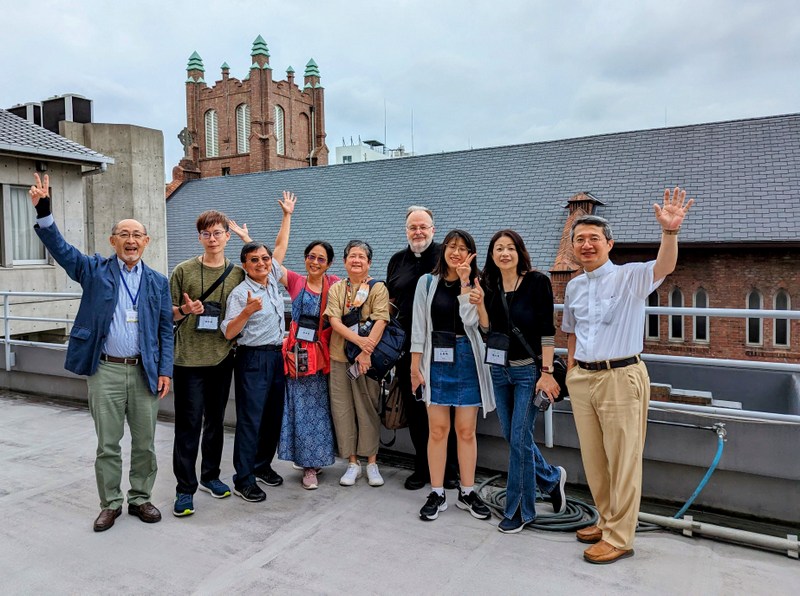
We also went up onto the roof of the deanery, from where we looked across at the cathedral, ah it seems so small!


There is also a very attractive cross in the church of blue and black Japanese lacquerware, made by a church member for the cathedral’s 150th anniversary. It’s gorgeous!

A big thank you to Rev. Yoo, Rev. Wilson and all at the cathedral for the warm welcome and tour around. It was a really fascinating morning!
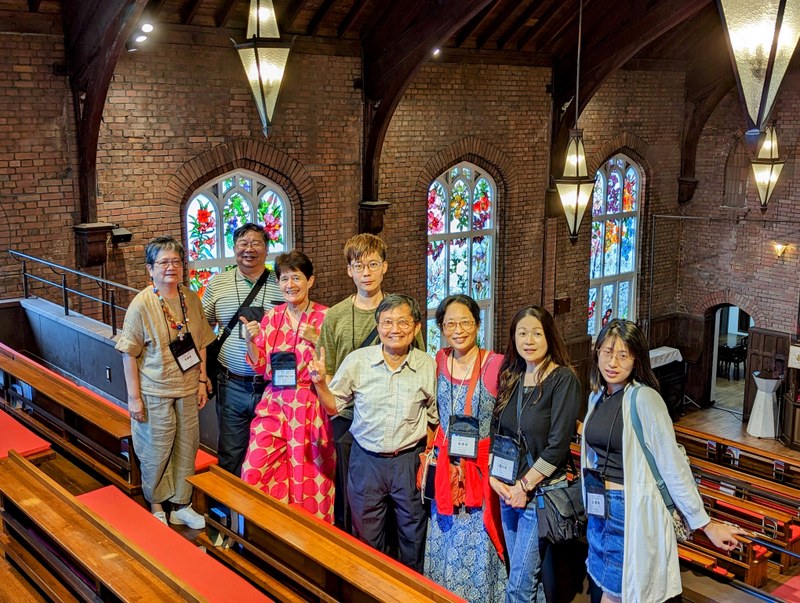
Our trip to Osaka was organized by a tour company, and although the main focus and reason for going was to visit the Diocese of Osaka, there was also some spare time for sightseeing, shopping, exploring and eating. We traveled to Osaka on Saturday June 10 on a 2-hour flight that got us there late morning. The typhoon that had brought rain to Taiwan for the previous few days gradually moved north towards Japan about the same time as we did, so we had cloudy, overcast and rainy days for the first part of our trip. Compared to Taiwan, we all thought Osaka to be nice and cool, but the Osaka people were saying how hot and humid it all was!


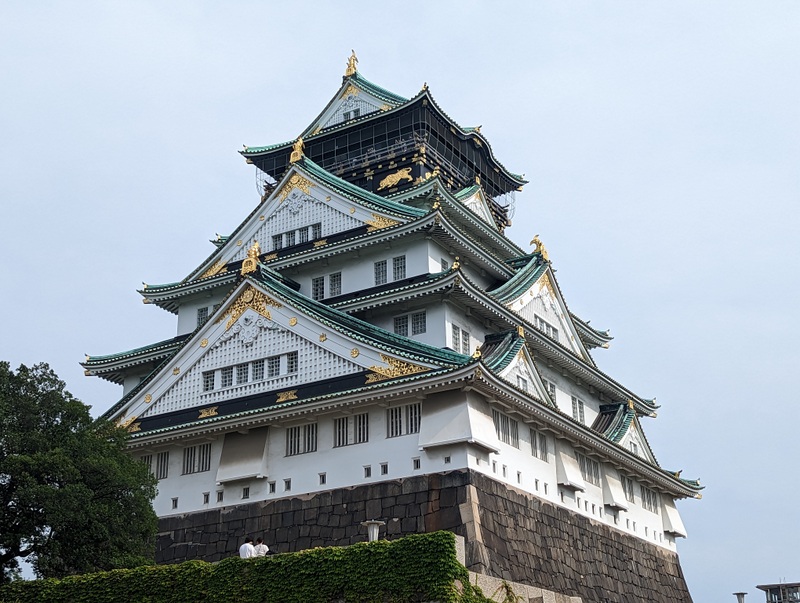
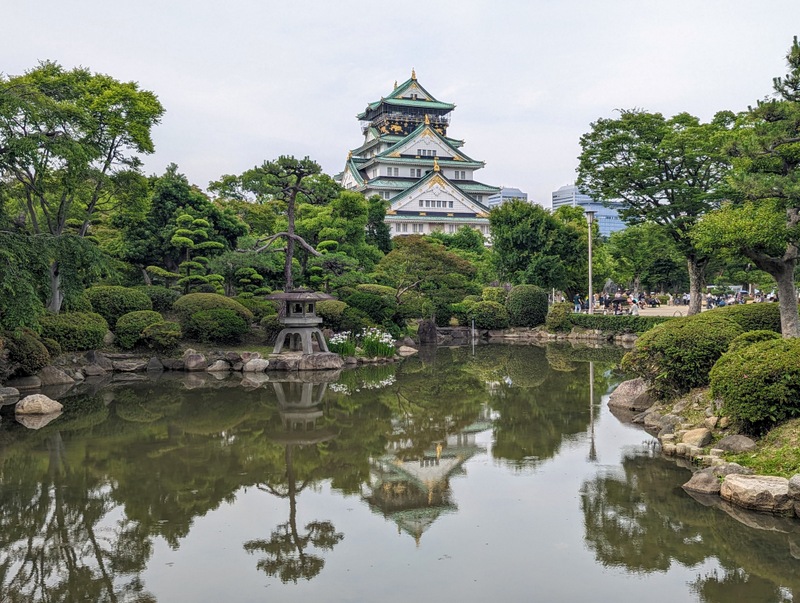
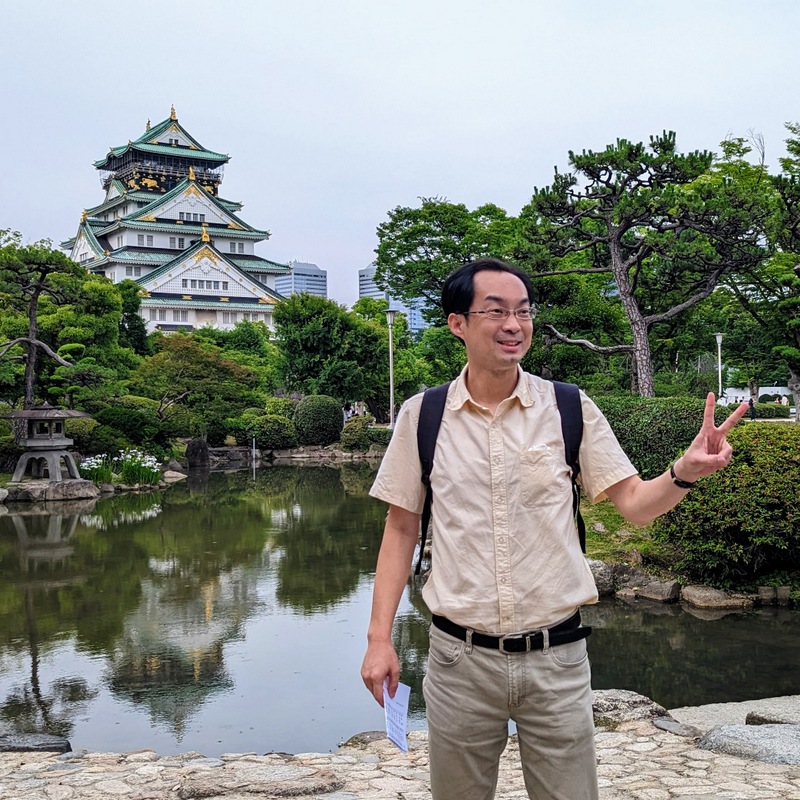
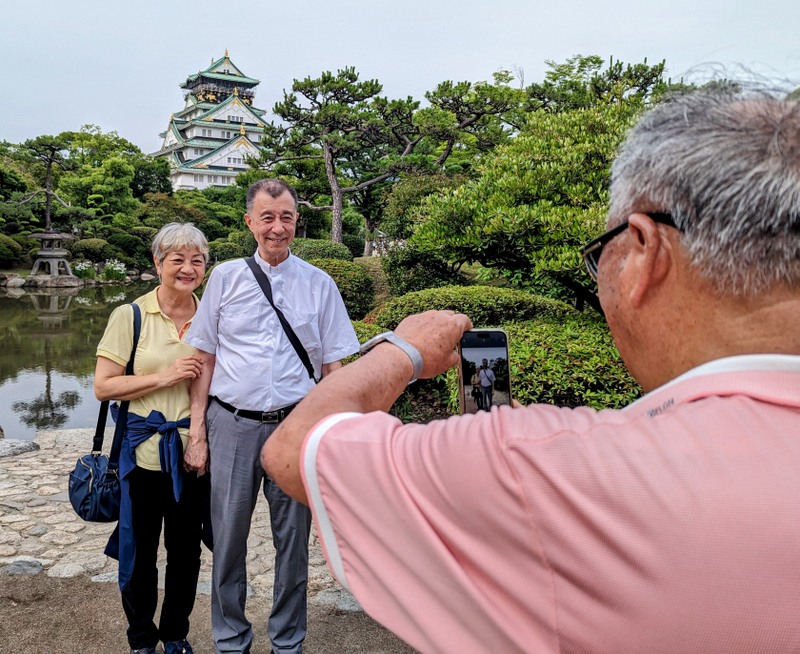
On arrival, a coach took us straight to visit Osaka Castle, one of the most famous landmarks in the city.
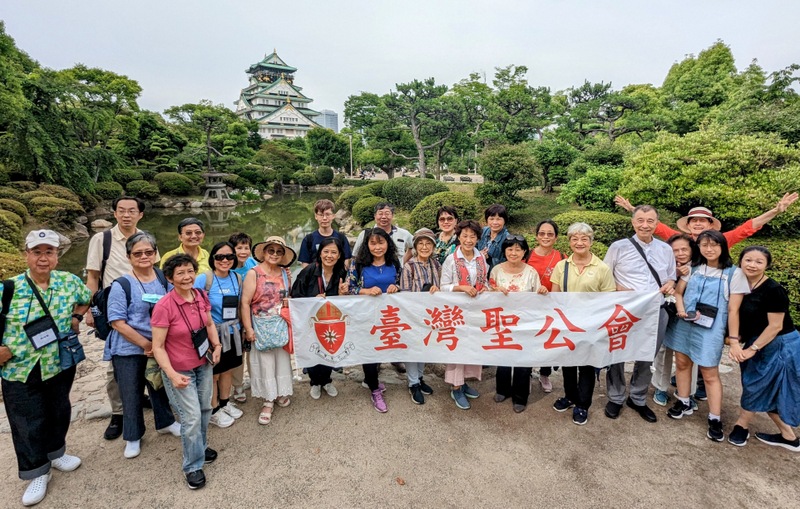
There was lots to photograph! In case you’re wondering why hydrangeas are so popular for photos, well, as one of our group members commented, in Taiwan, you have to pay to see hydrangeas, so we wanted to make the most of them in Osaka!



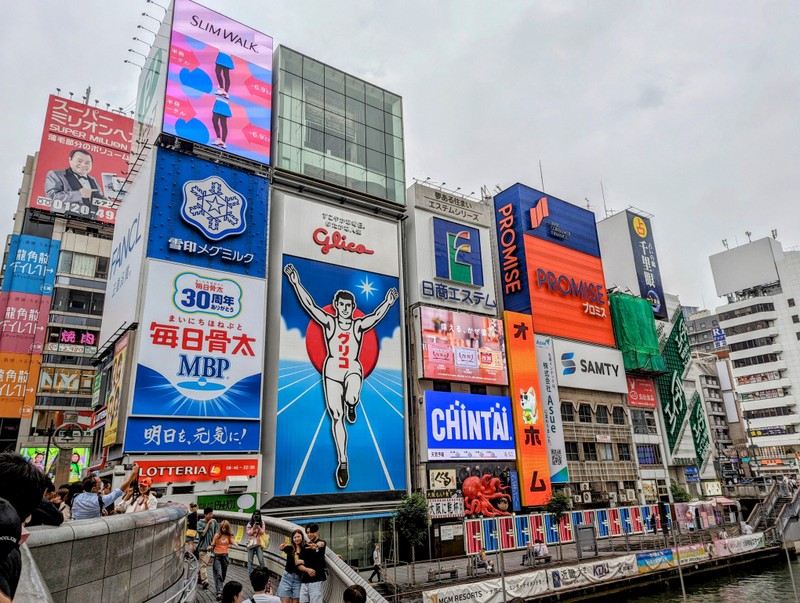
We stayed for 3 nights in a hotel right next to the main Osaka Station, with department stores on one side, and Osaka’s bars and clubs on the other. Osaka is a big bustling city, with huge buildings that are largely white, grey, silver or black in colour, as are the young people’s fashions and as are the cars, and with the overcast and rainy weather, so it was great to see some colour at night time!


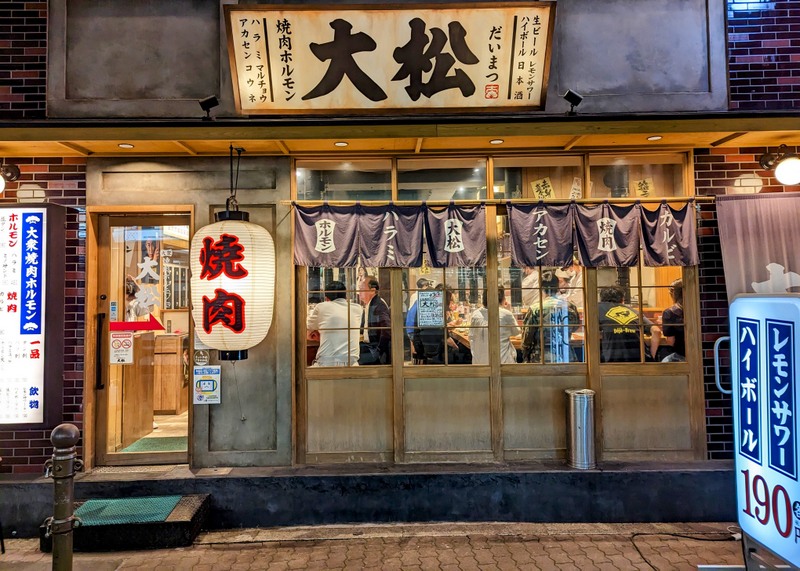
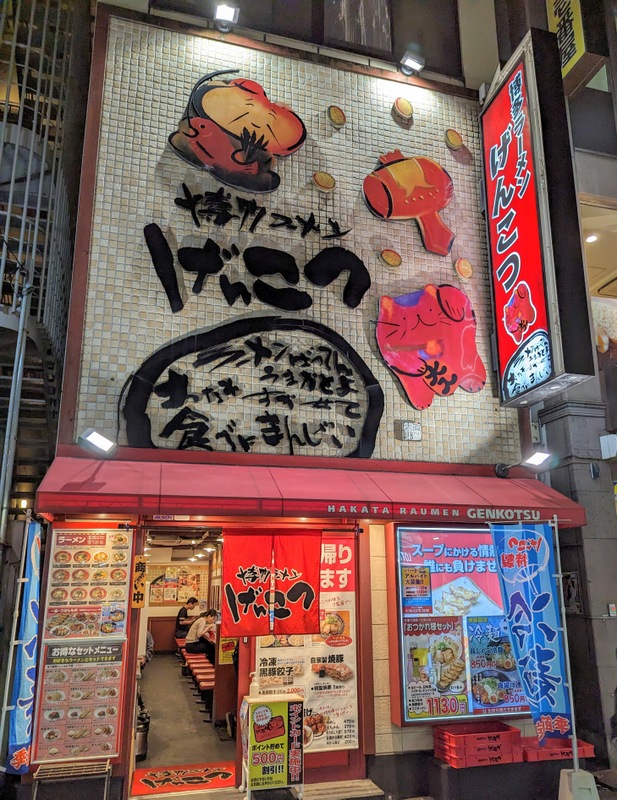
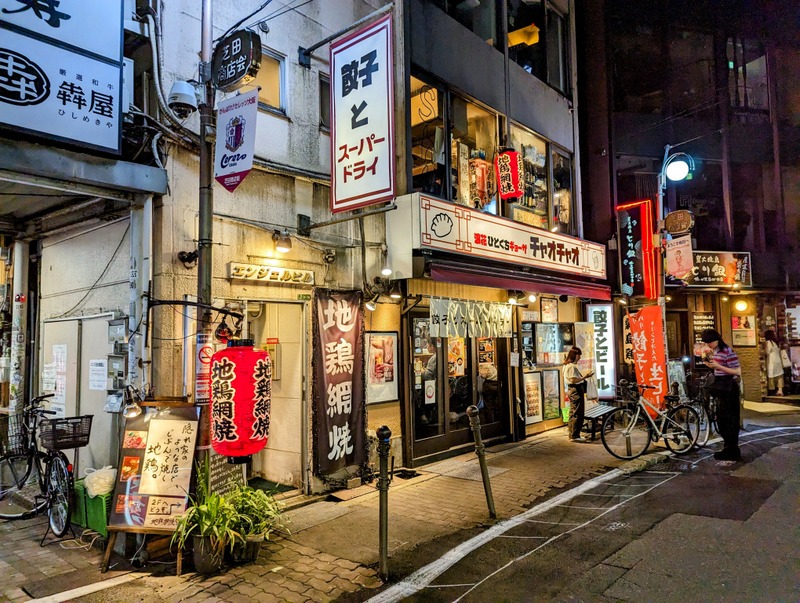


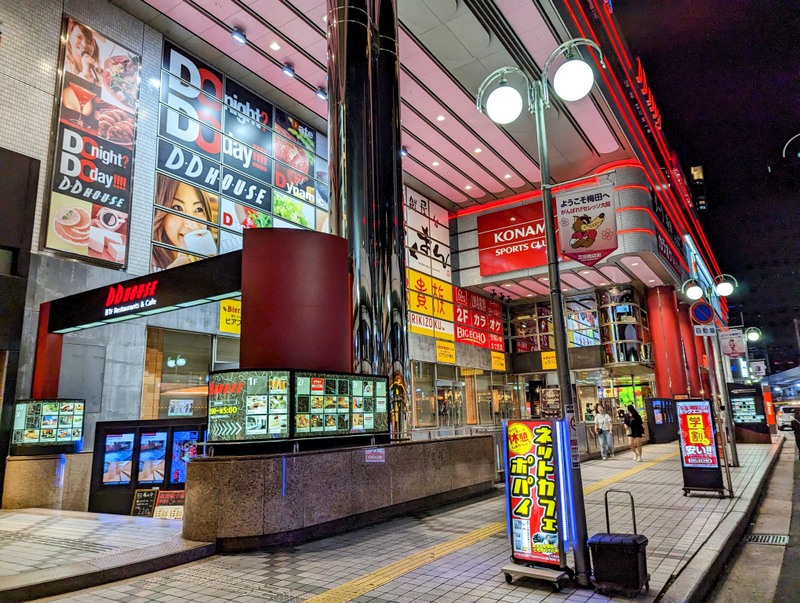
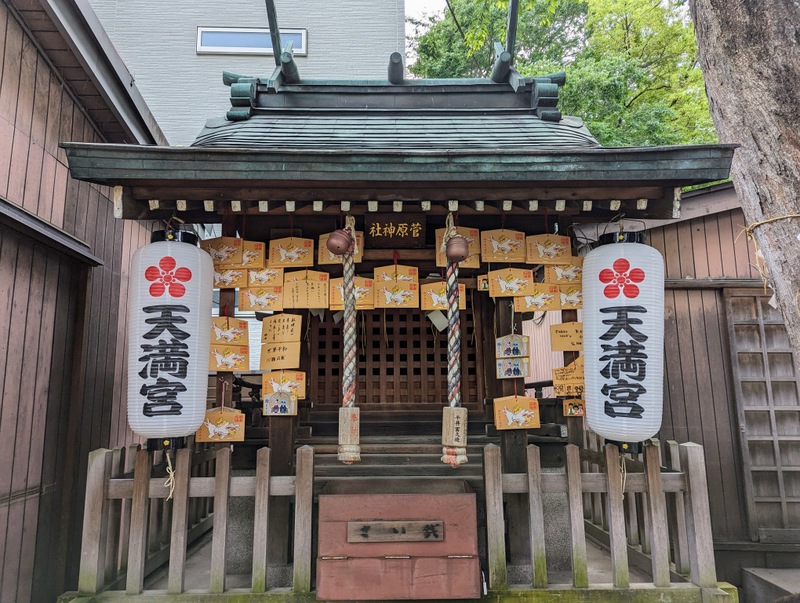
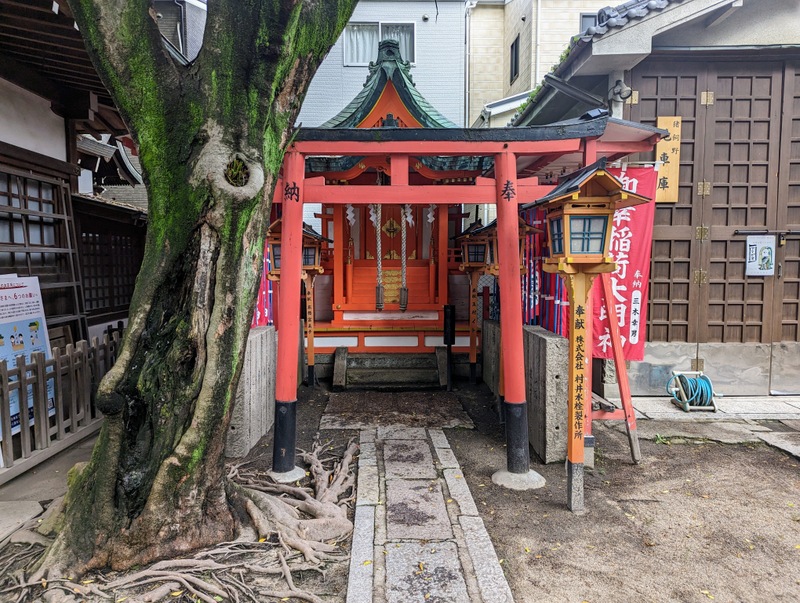
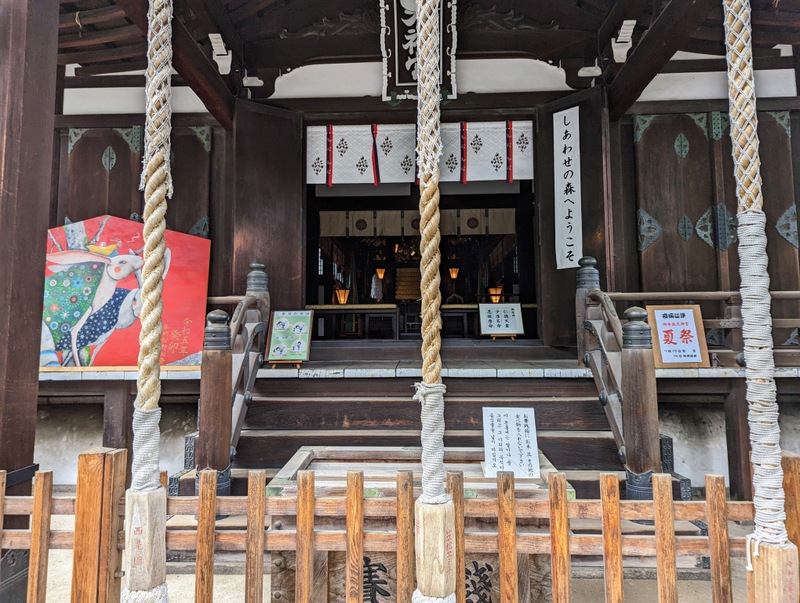
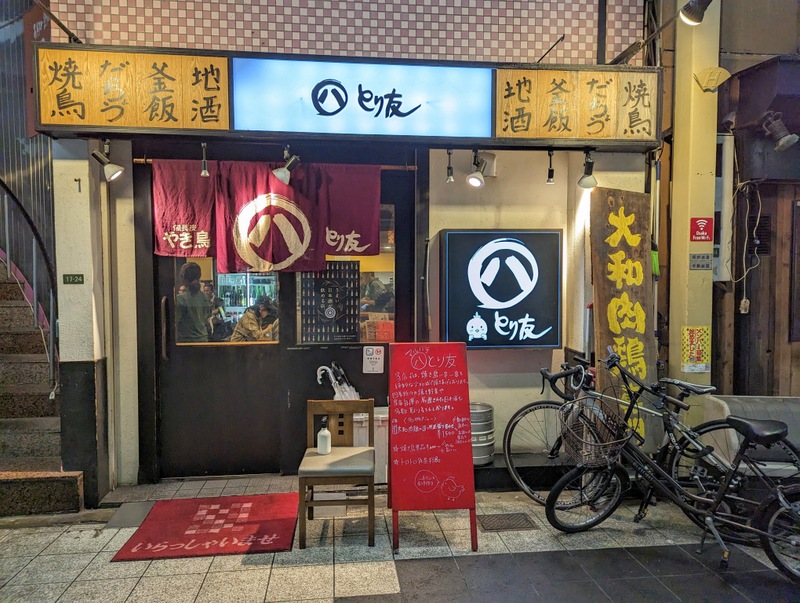
At 5:00 am on Sunday morning, I was up and out for some exercise in the bars and clubs area – there was also a Shinto Temple there which was open. Really interesting to see Osaka’s 24-hour night scene, drinking, eating and singing karaoke all night long. Advice from our tour guide was to be very careful taking photos, even people in the background will not want to be in a photo – so I can assure you that although the photos below look like there are not many people out and about – actually there were. I loved looking at all the Japanese vending machines – not just soft drinks and coffee, but some selling alcohol and cigarettes too.

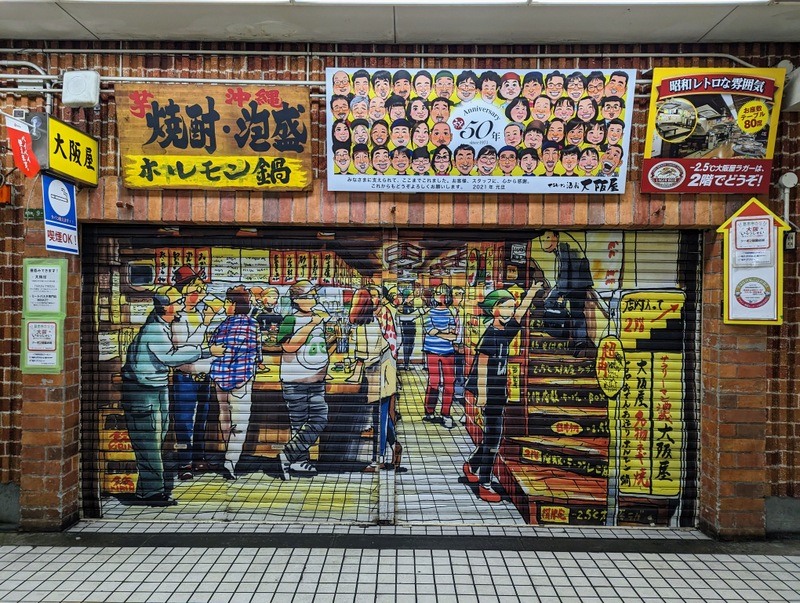


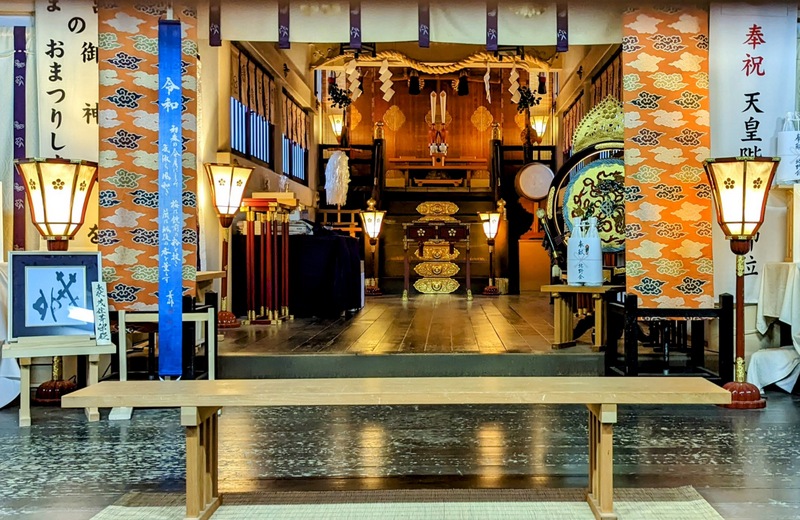


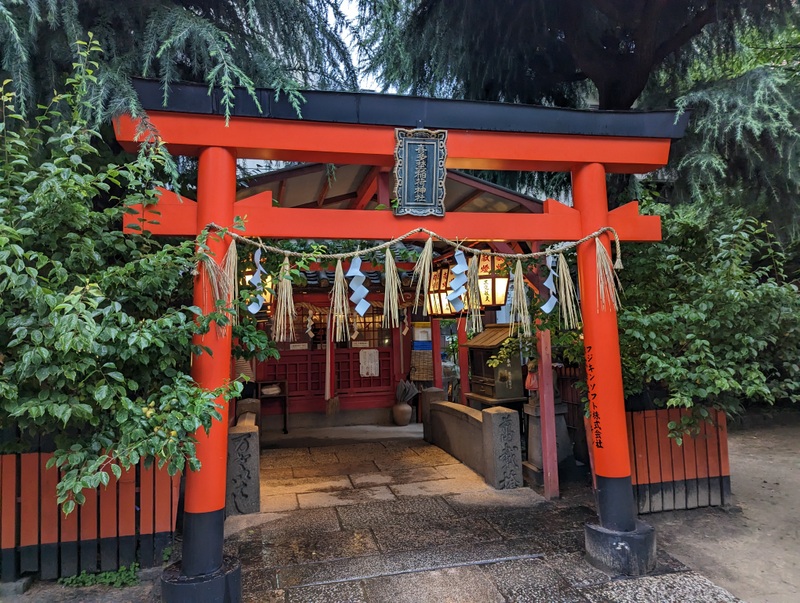


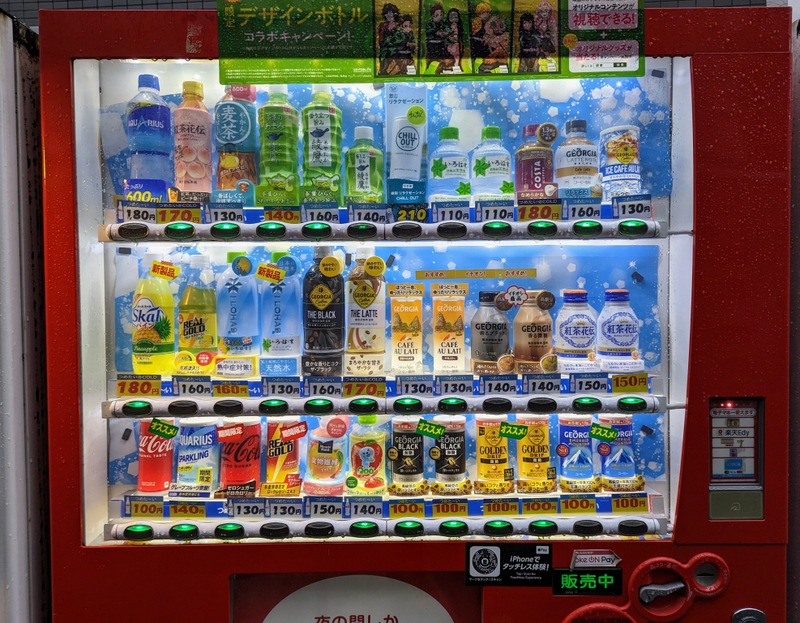
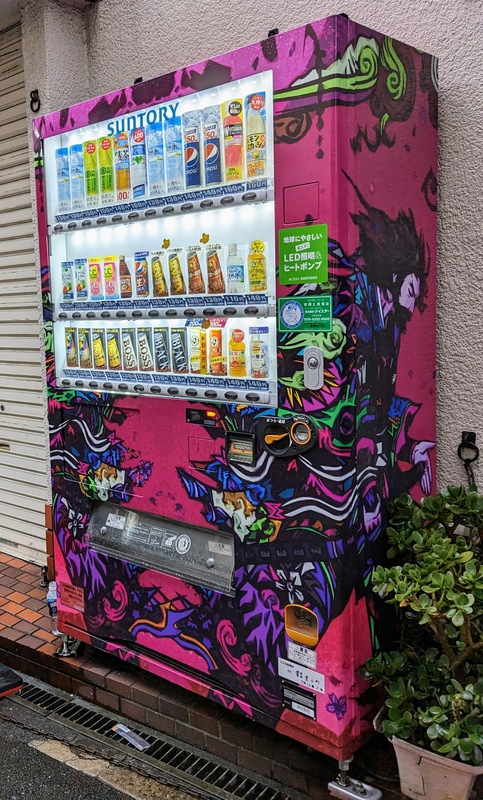
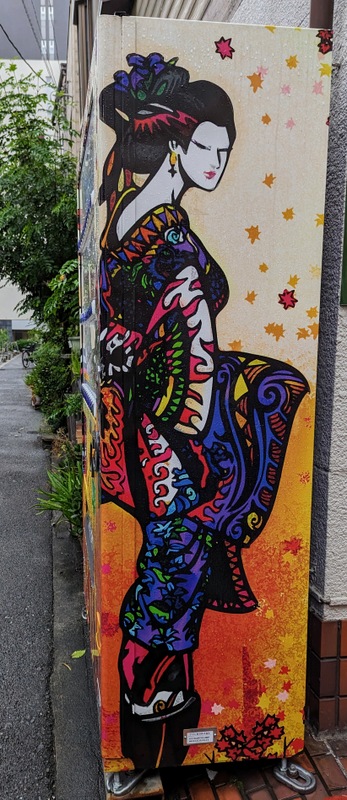


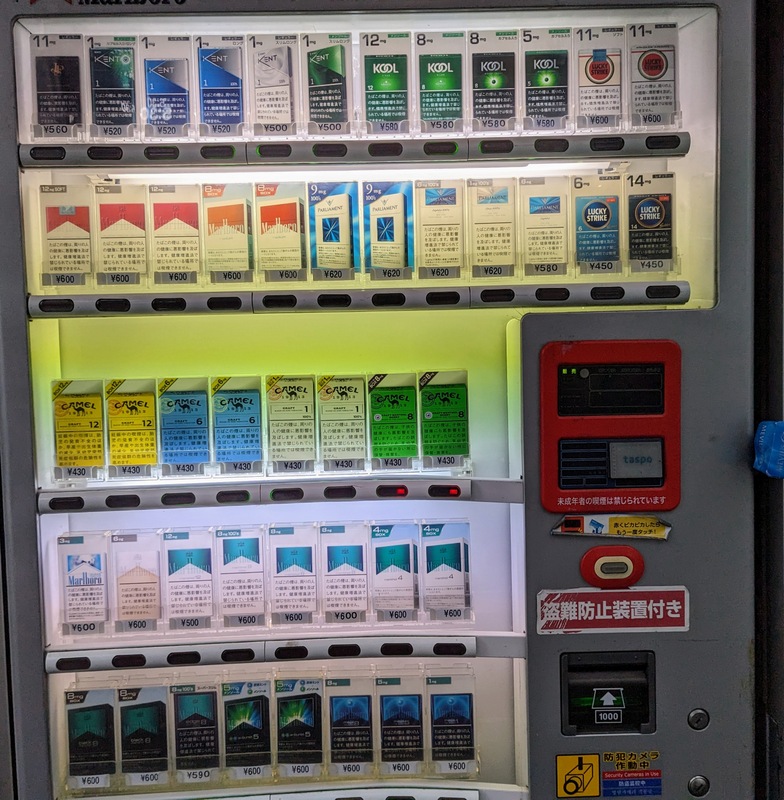



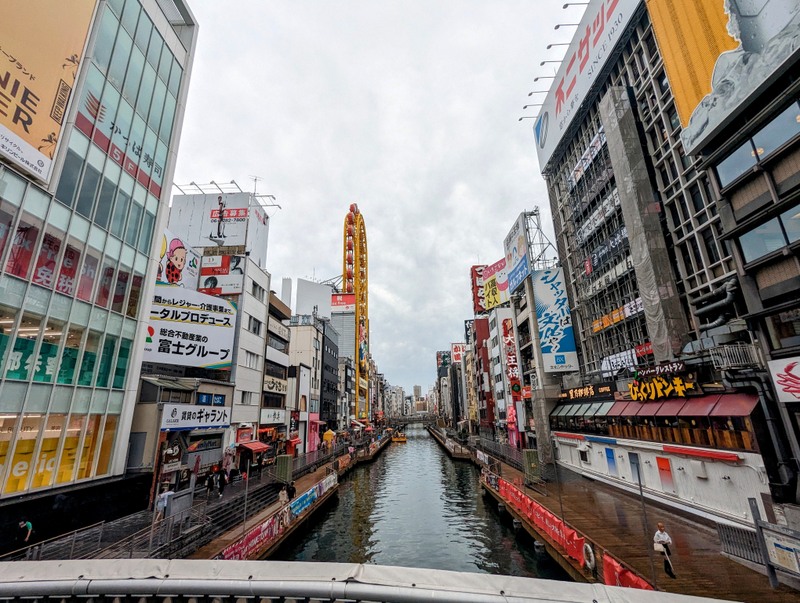
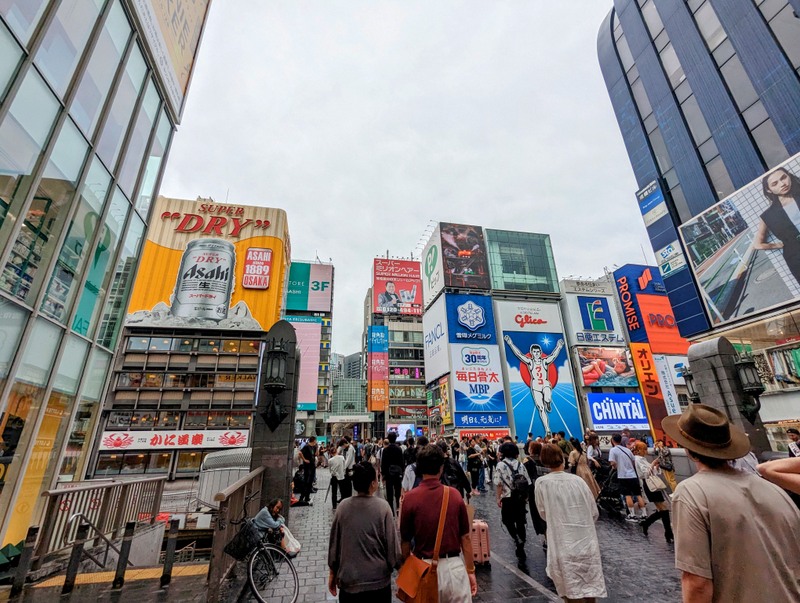
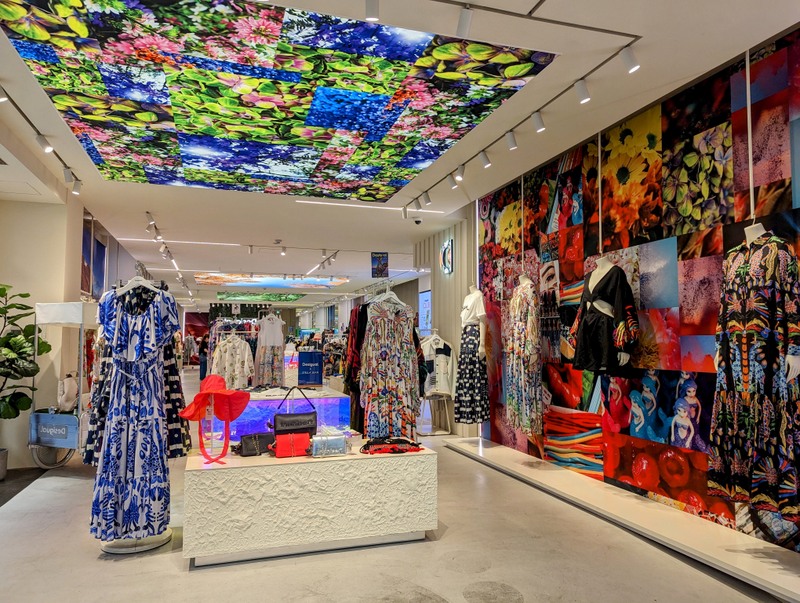
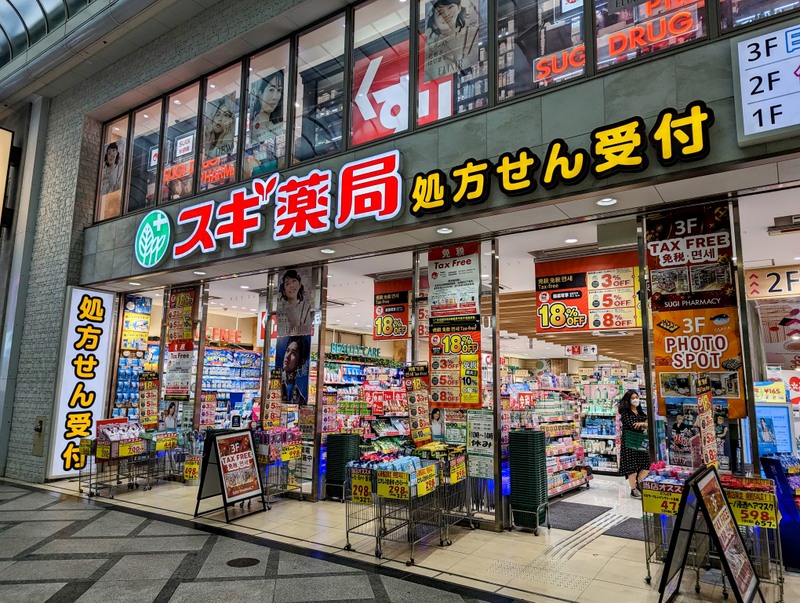
On Monday afternoon, after our church visits in the morning, so we had a chance to go shopping. We went by the Metro Train to Shinsaibashi – along with everyone else it seems, wow, it’s a popular place! Japanese products are very popular in Taiwan, especially pharmaceutical items like vitamin pills and cosmetics, and buying them in Japan is much cheaper, so our group made the most of it. I saw several people in our group carrying bags full of bottles of Wakamoto, and others trying out all the different beauty products. Ah, shopping, it’s fun!






On Tuesday, we were all packed up, with luggage, ready to move to a different hotel that night. Hannah and Regina were both wearing black and white, yes, gotta take a photo!

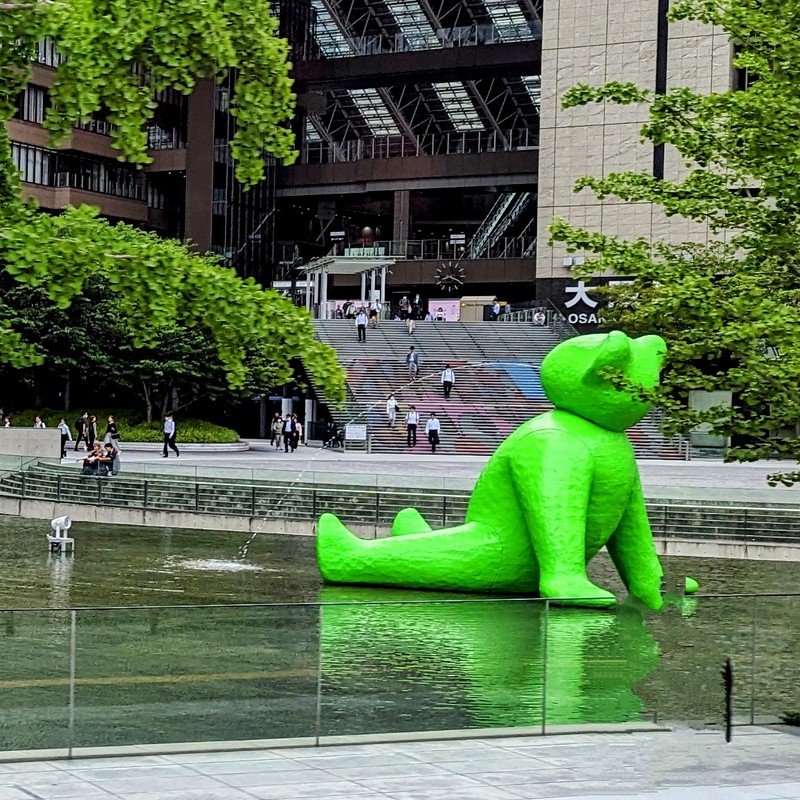
As we left the hotel, we did see some color – this sculpture!
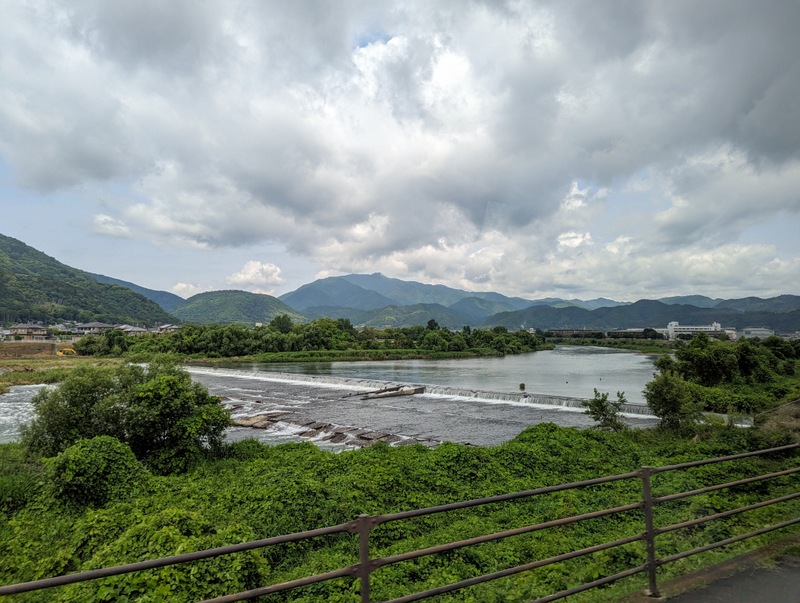
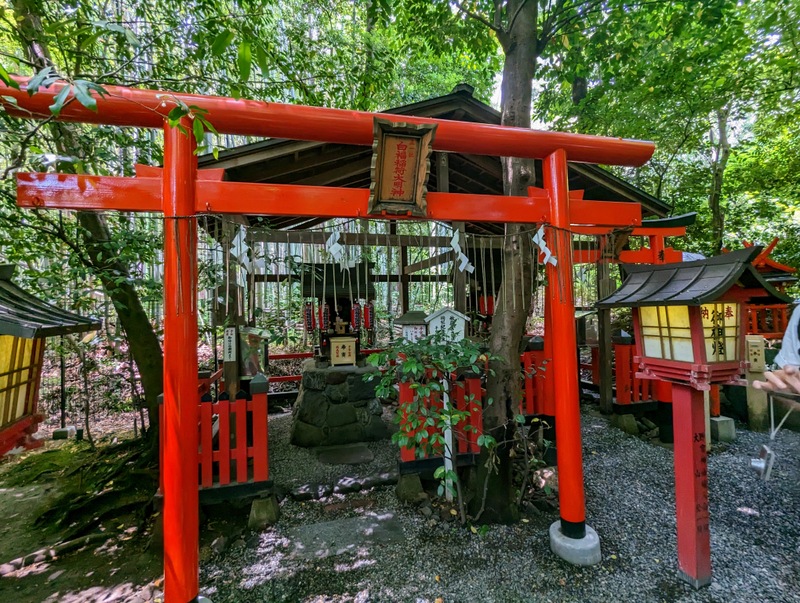
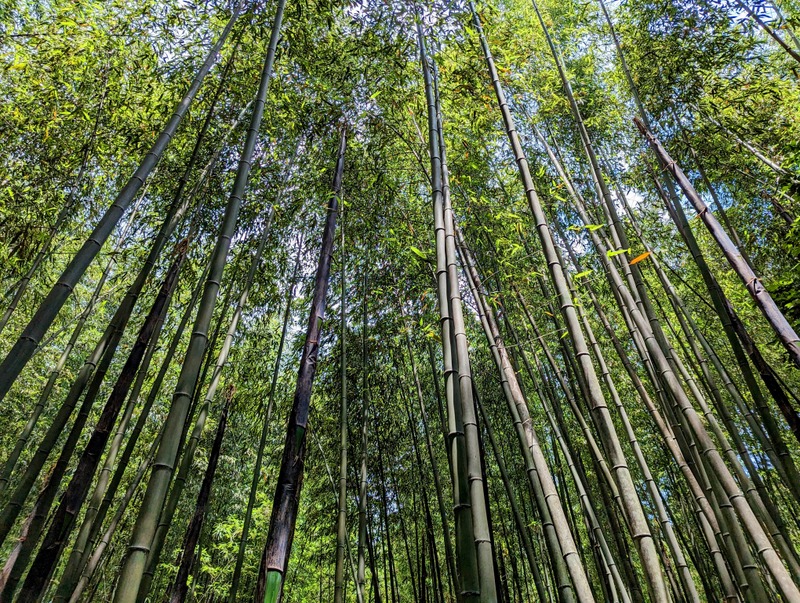
We had a whole day for sightseeing, though we started off first with a trip to the duty-free store for gifts. Our tour guide had arranged a busy day for us, and he emphasized the importance in Japan of punctuality – and that we should make sure to be on time for everything that day. He joked that in the business, they always say to expect Mainland Chinese tourists to be 30 minutes late and Taiwan tourists to be 10 minutes late, but to expect Japanese tourists to all be ready 10 minutes early! We headed out of Osaka to Japan’s ancient capital of Kyoto, about an hour’s drive north, and considered Japan’s cultural capital and major tourist destination. Up in the mountains, our first destination was the lovely cool, green, and tall Arashiyama Bamboo Forest and its famous Nonomiya Shrine, where imperial princesses would stay for a year or more to purify themselves before becoming representatives of the imperial family. There were hundreds of people visiting, including many high school students, dressed in traditional Japanese kimonos for photos.
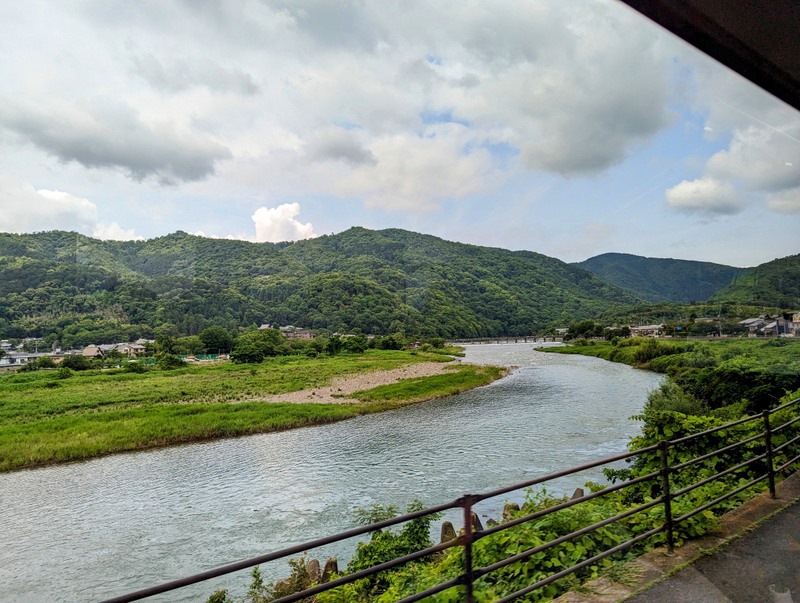

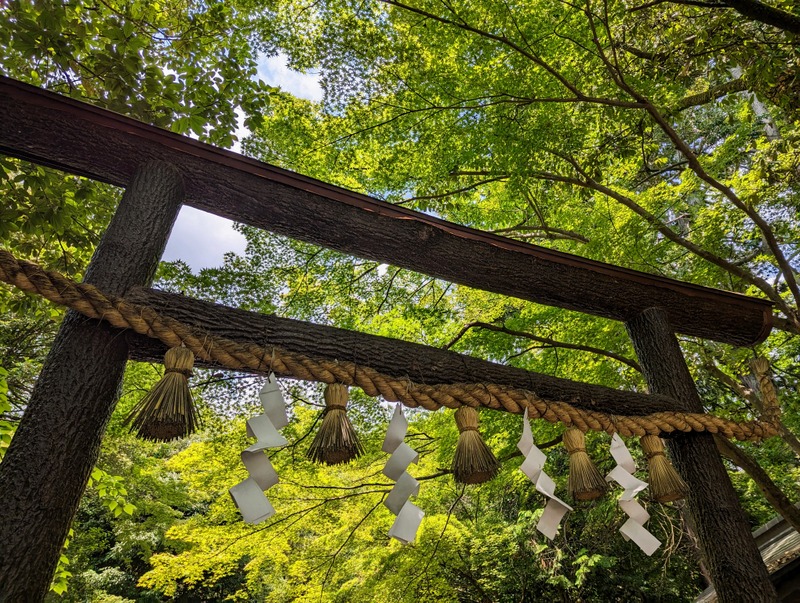
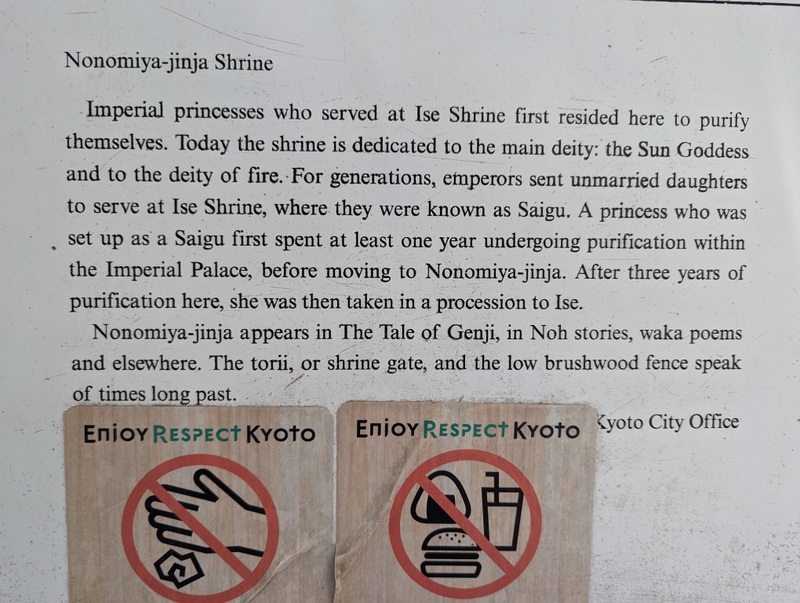


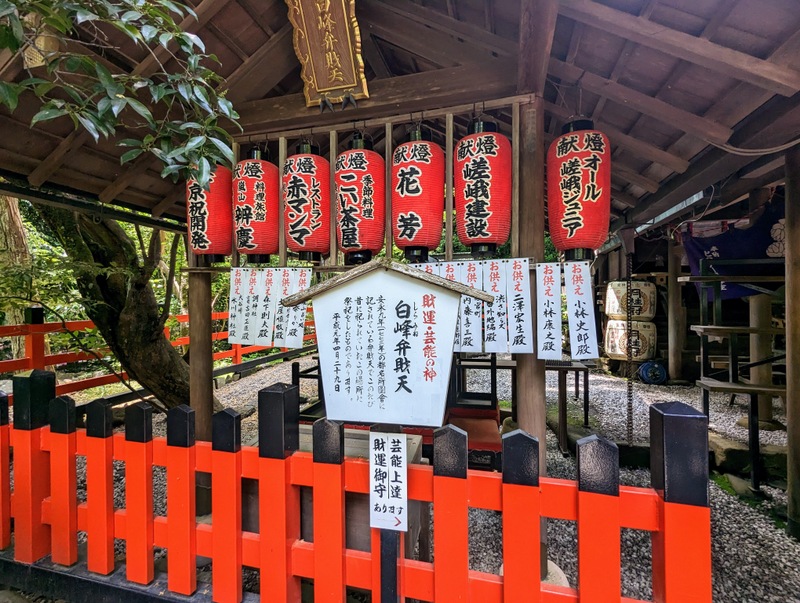




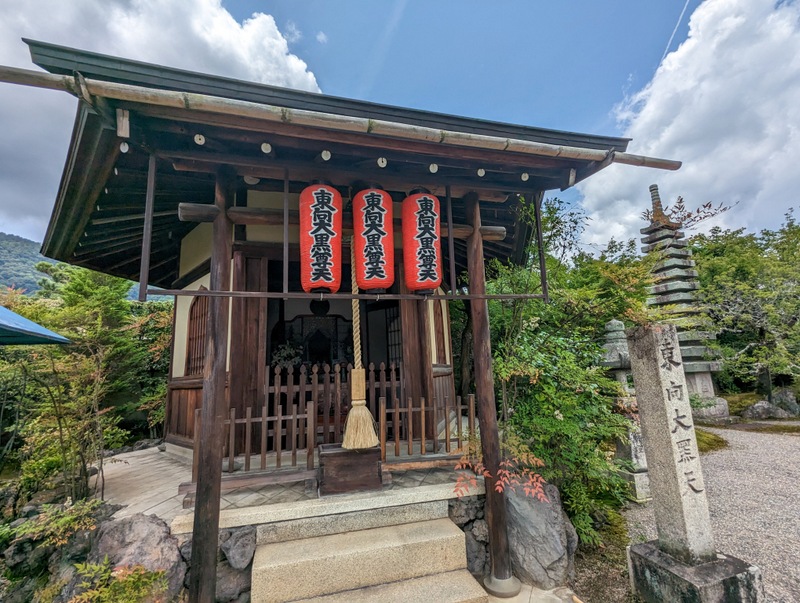
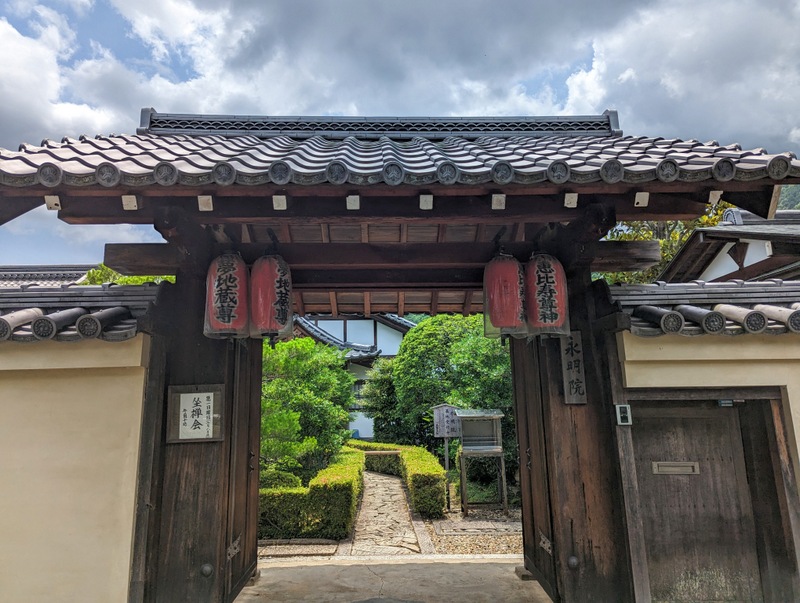
In the same area, we also visited Tenryu-ji 天龍寺 Zen Buddhist Temple, with the most beautiful gardens and grounds.






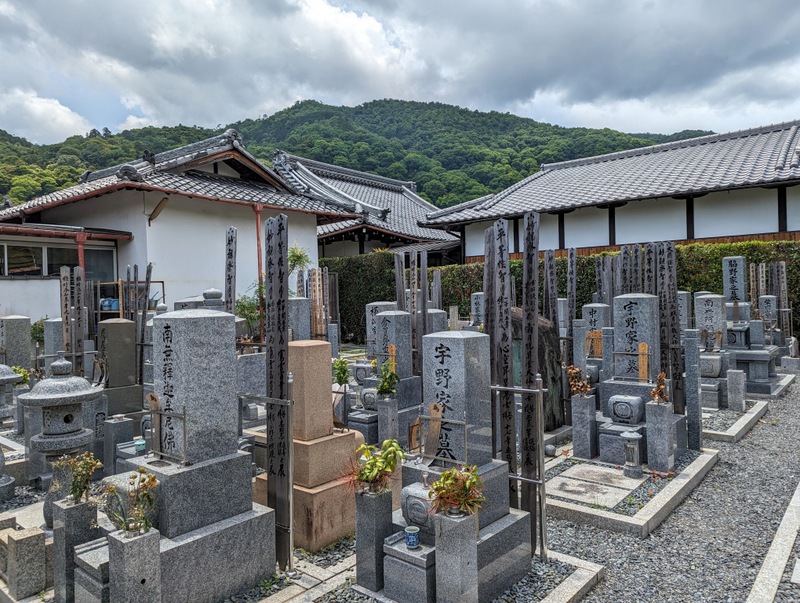
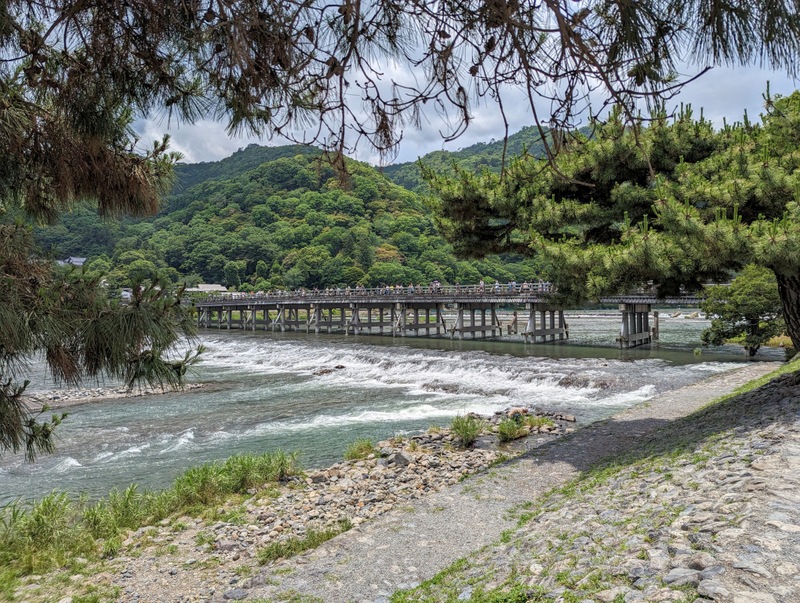


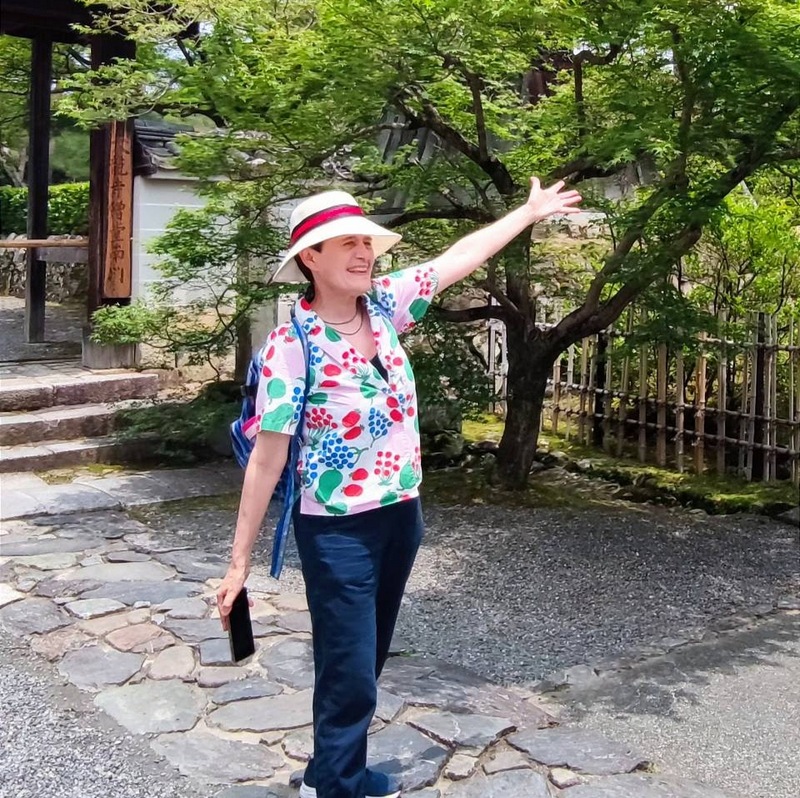


From there, after lunch, we went to Kiyomizu-dera 清水寺, a very famous Buddhist temple with a number of bright orange pagodas…
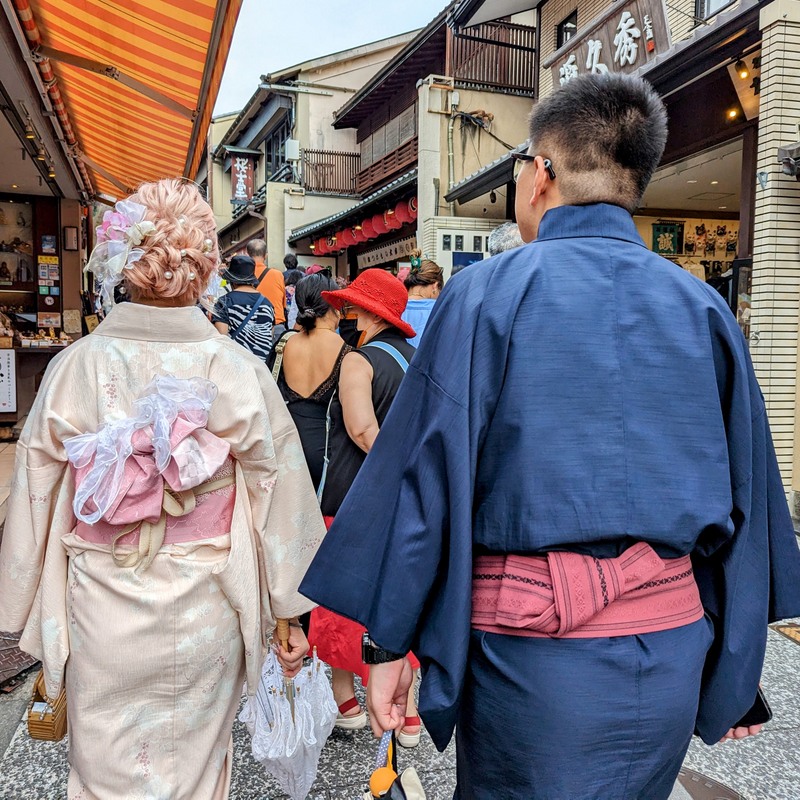
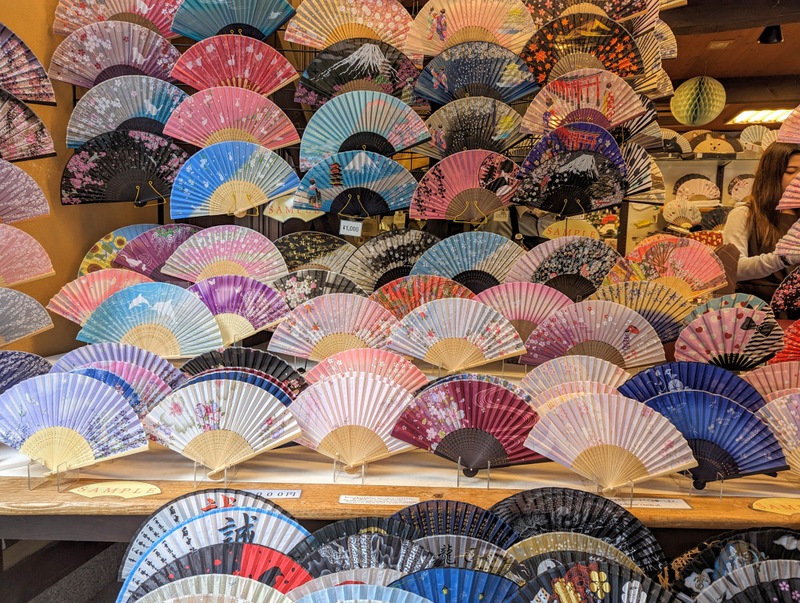


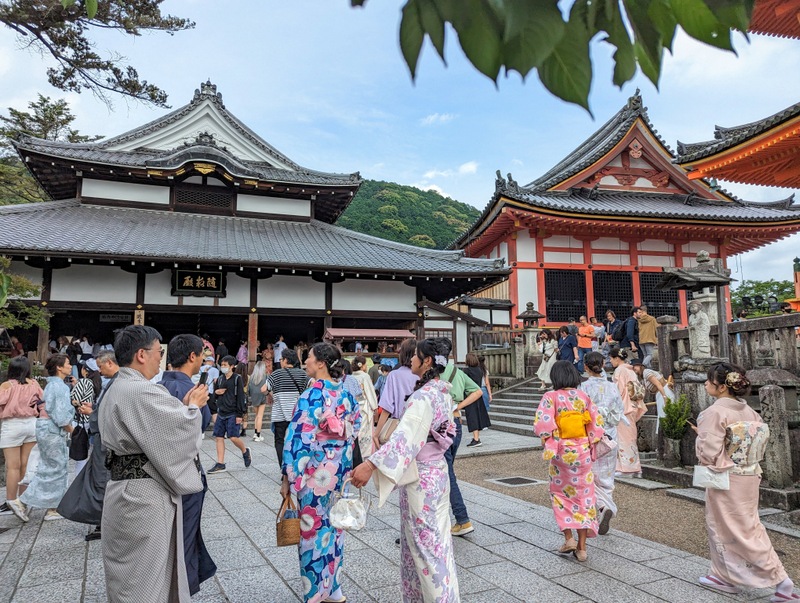

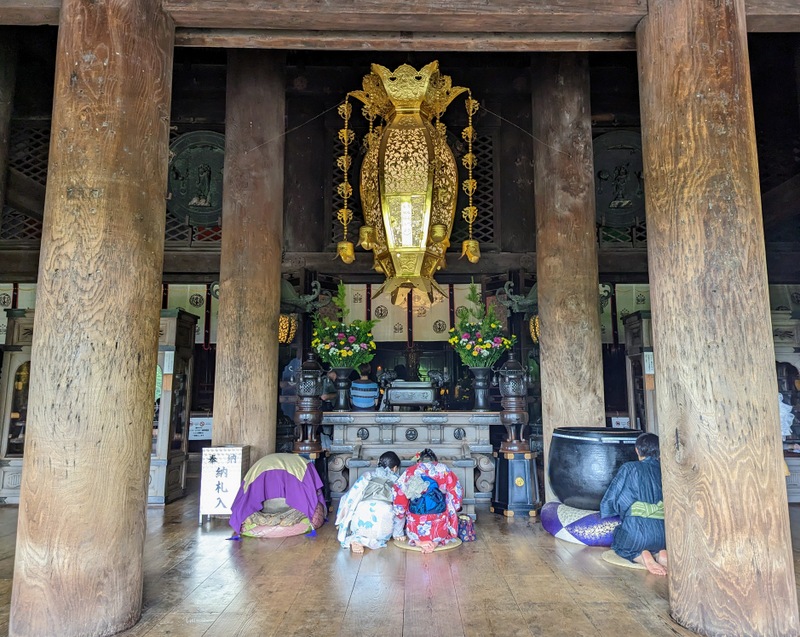


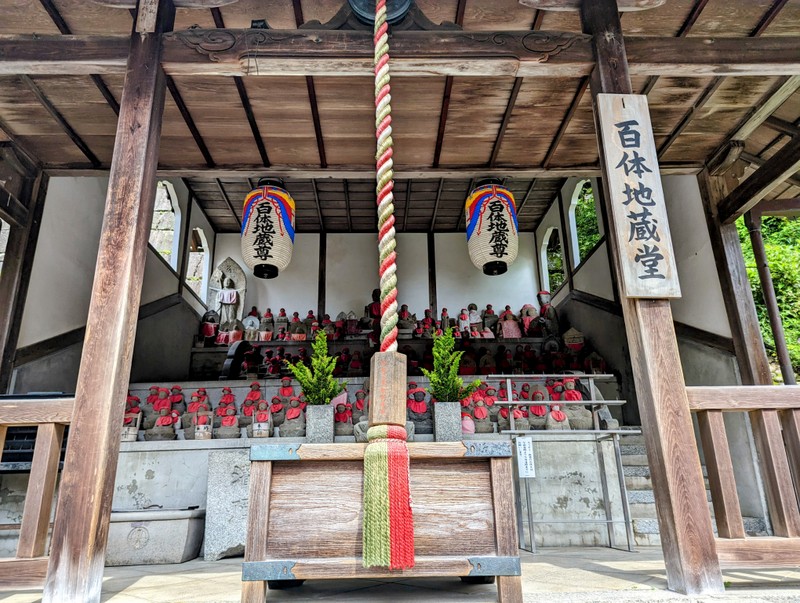

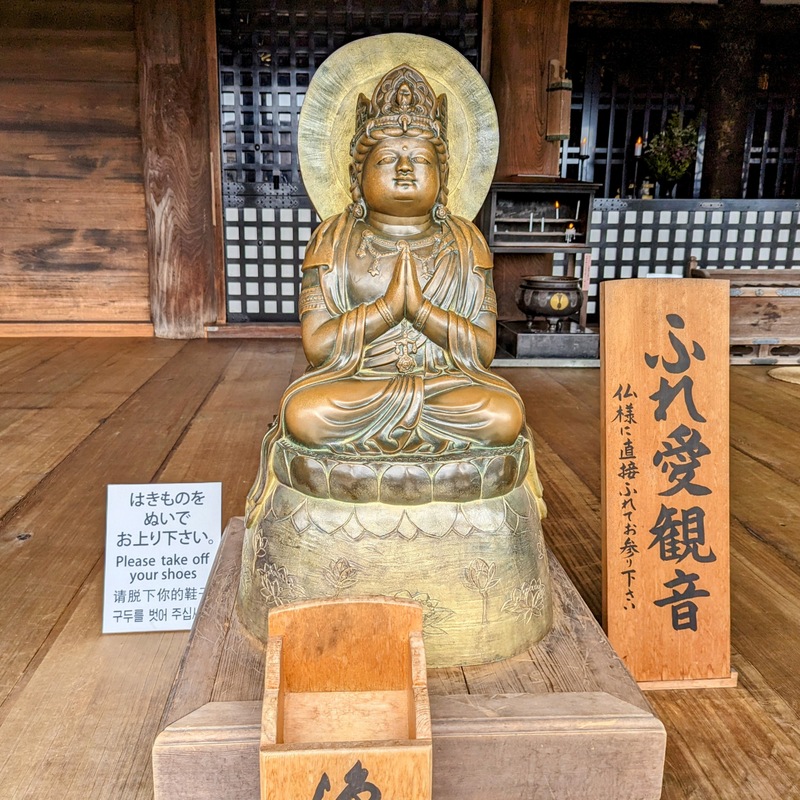


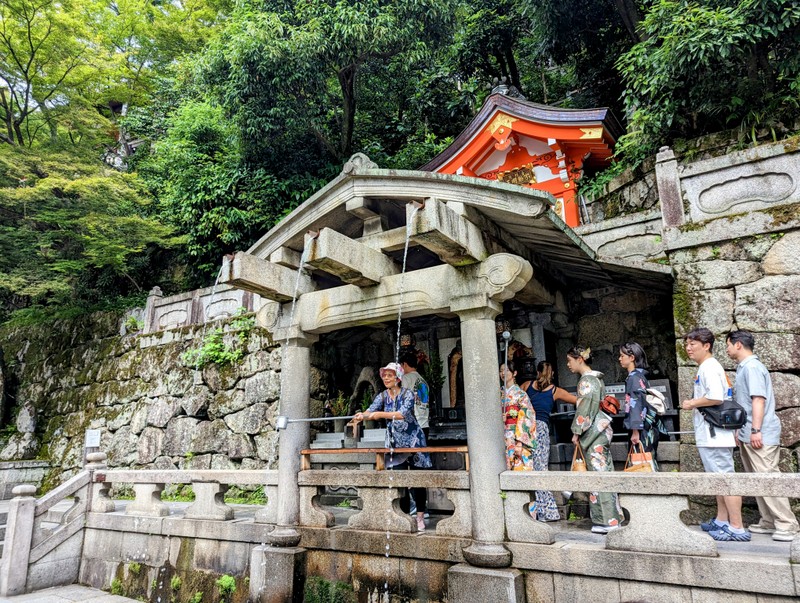


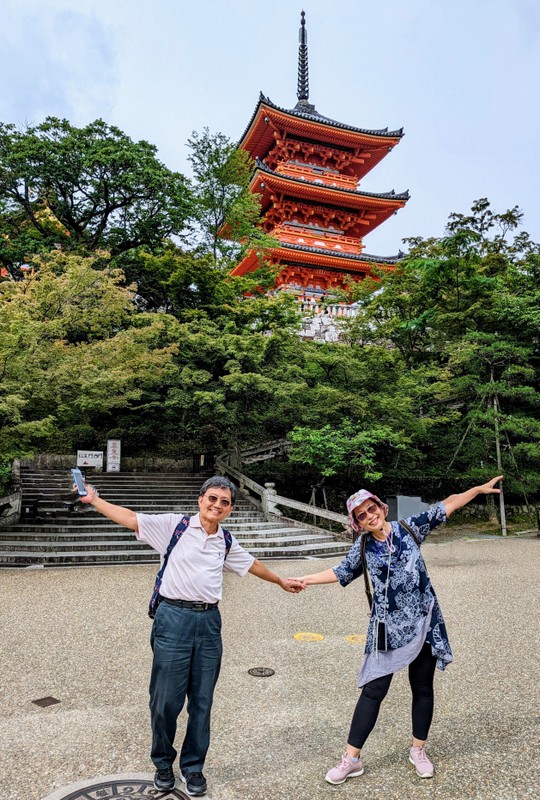
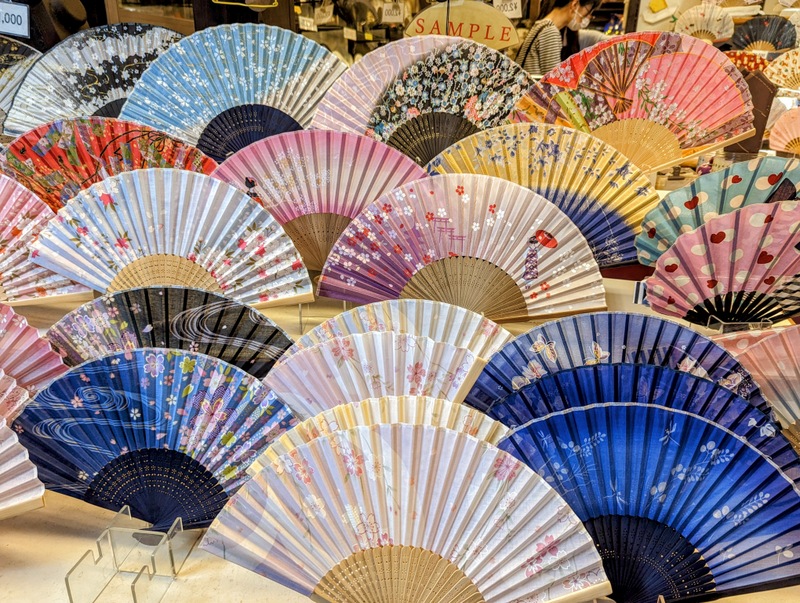

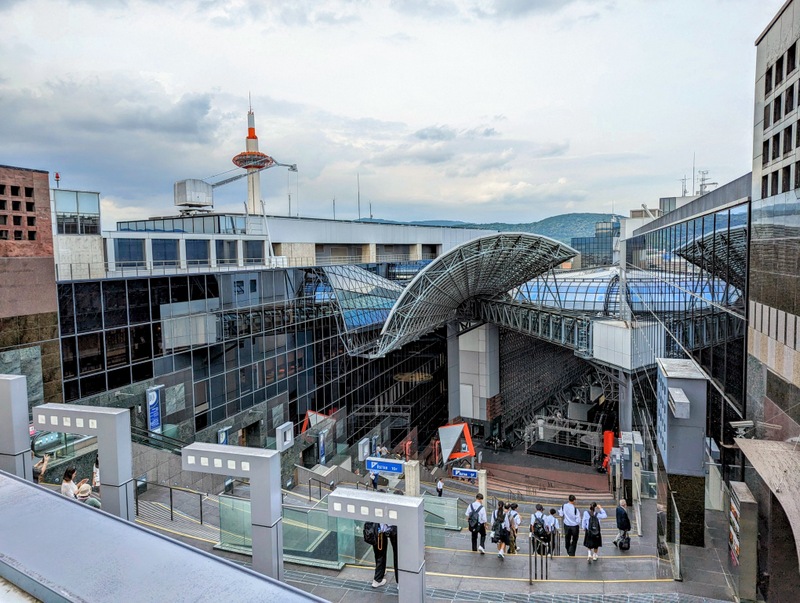
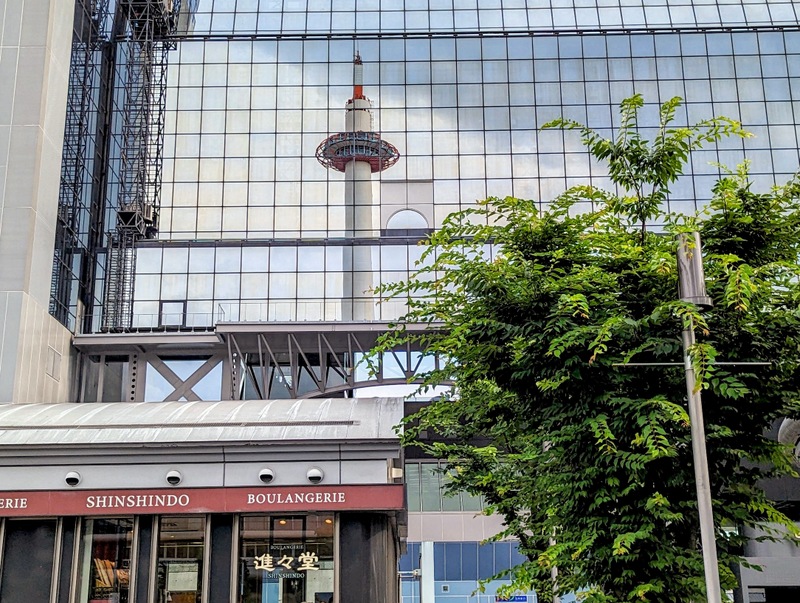
The next place to visit was Kyoto Station, with its huge escalators and quirky statues, and its high-level views over the city and of Kyoto Tower.







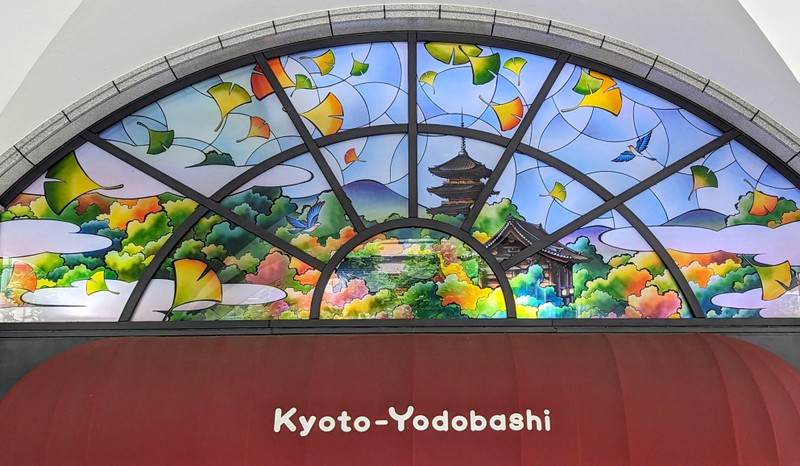


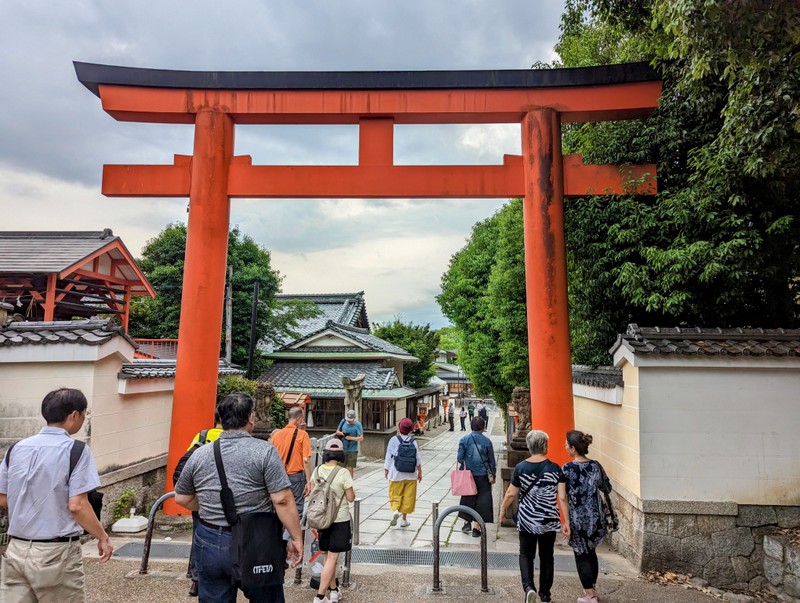
Our final stop was for dinner, but due to parking restrictions, we had to first drive, then walk via Yasaka-jinja Shinto Shrine. Most of our group were pretty exhausted by now, with all the walking all day long, so we were all relieved to get there!

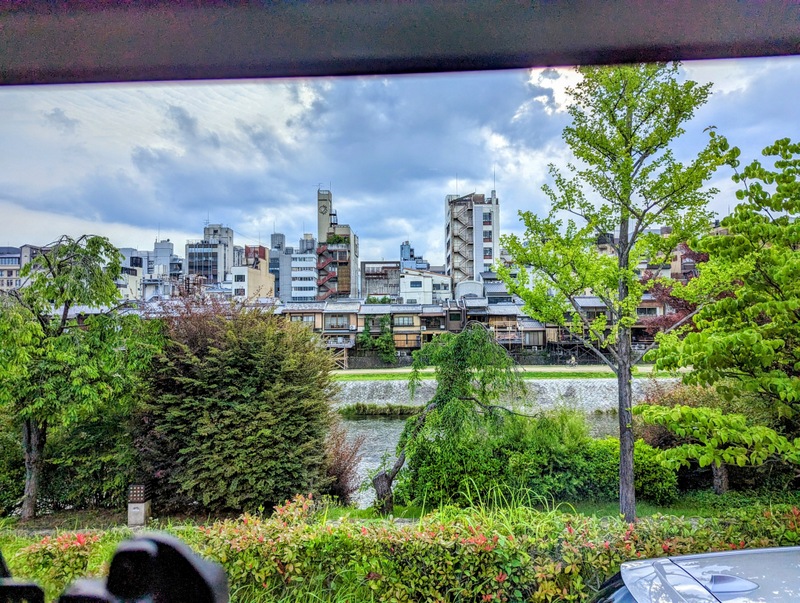
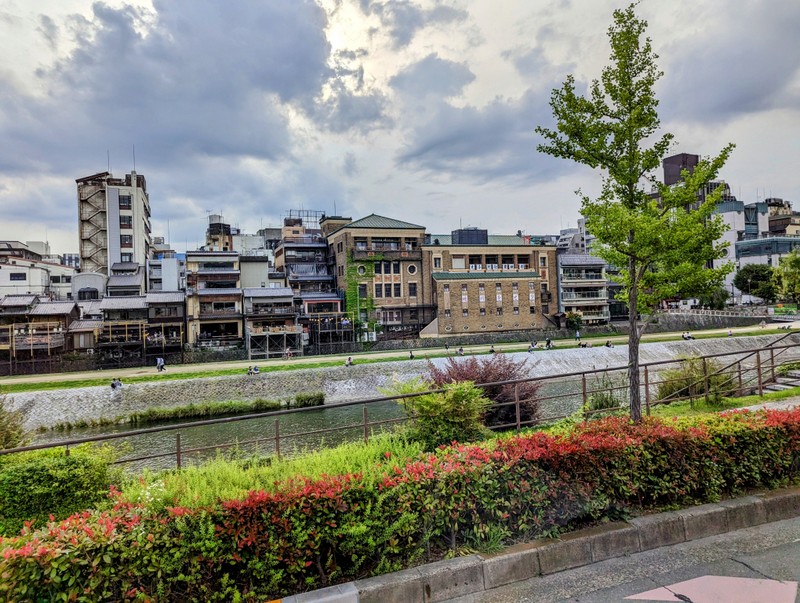
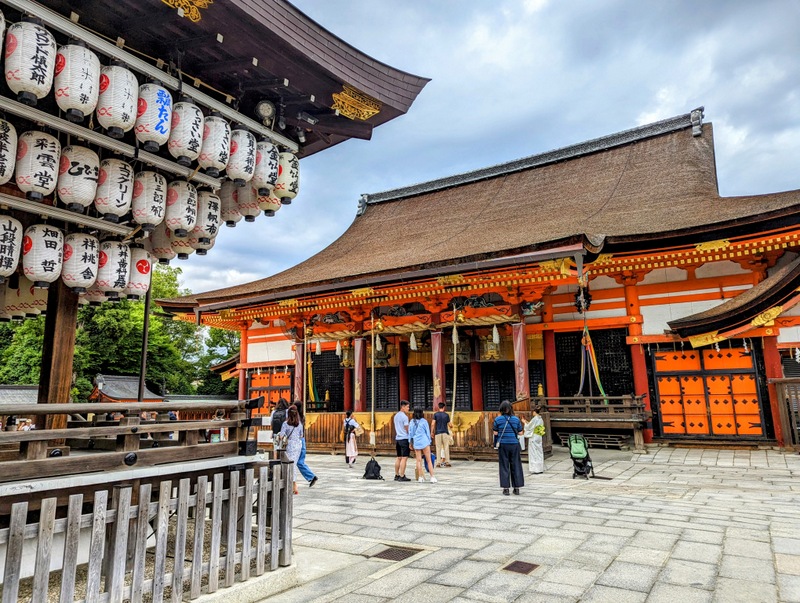
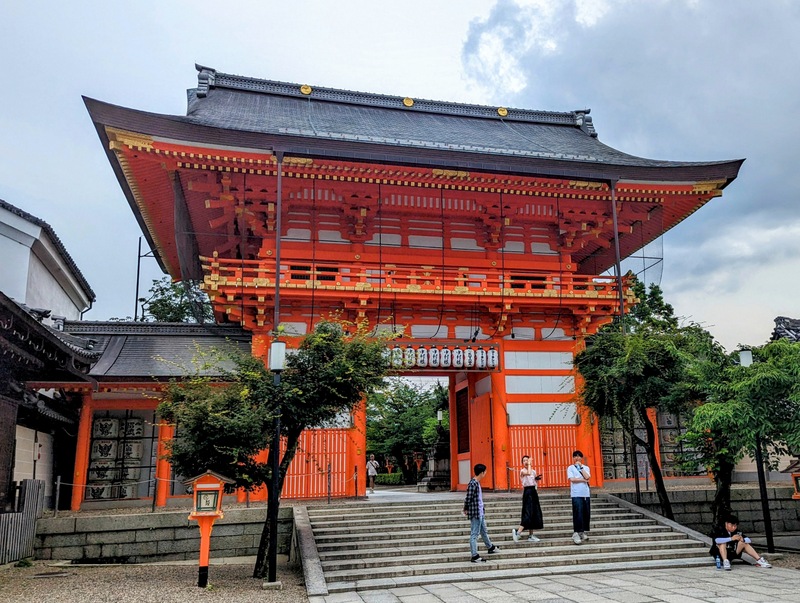

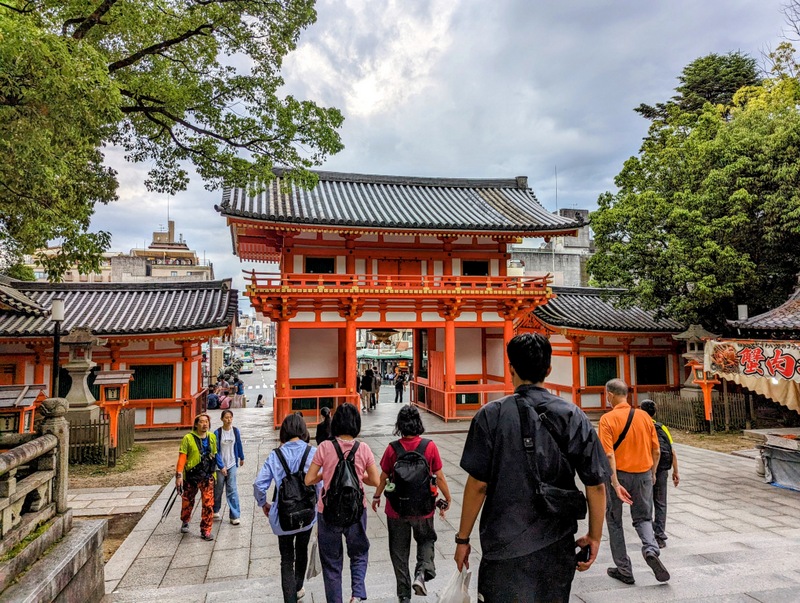

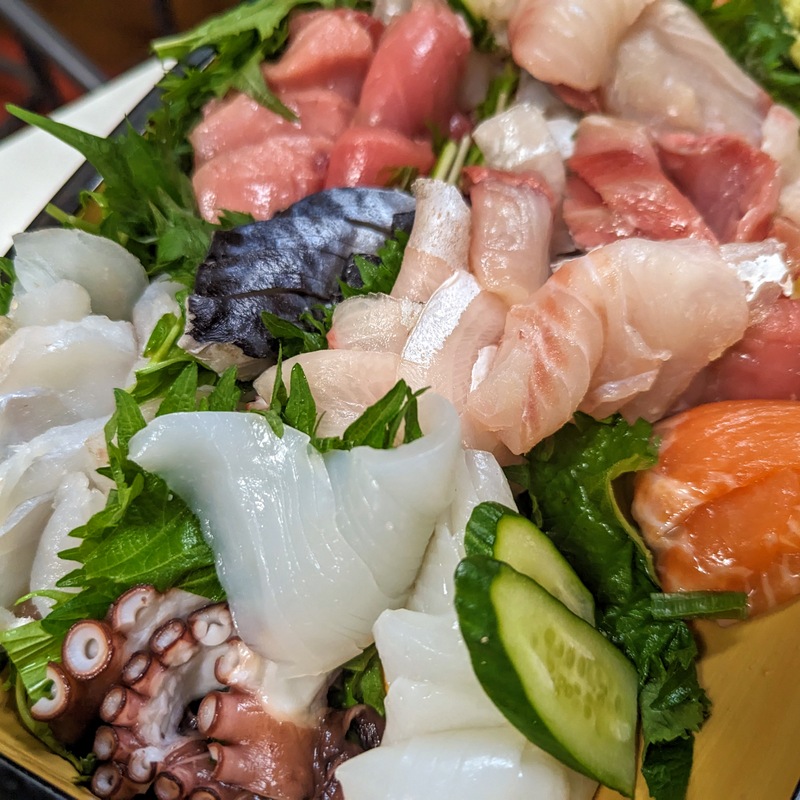
Our final dinner – in a place where both the food and the seating arrangements were Japanese-style. The food everywhere in Japan was delicious, as was the beer – and even the sake!


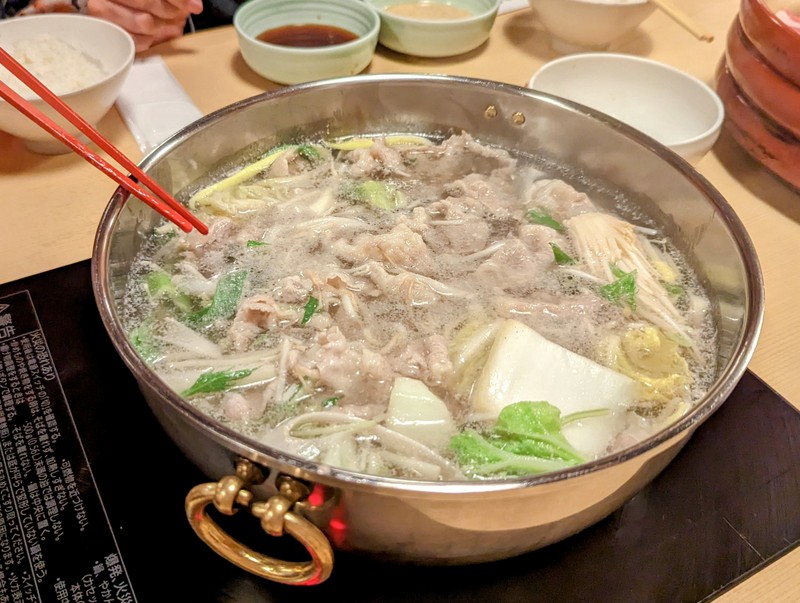
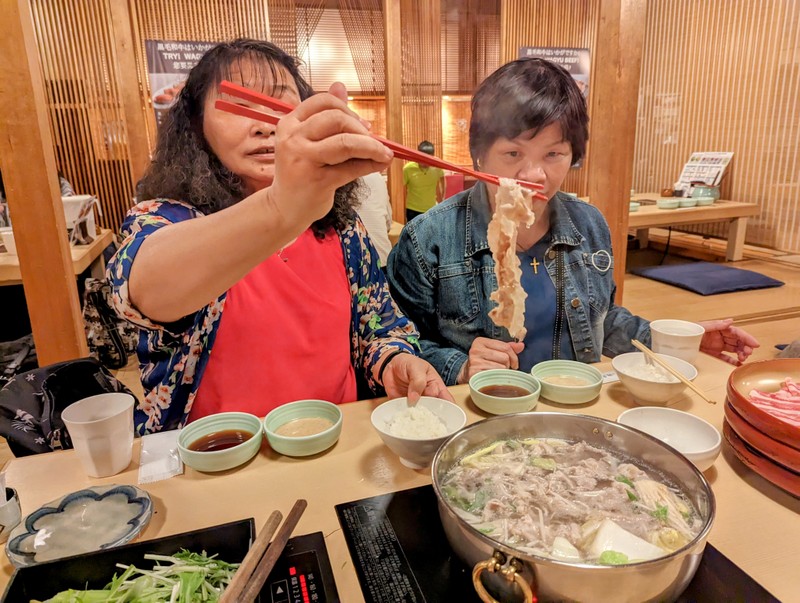


The next day, Wednesday, there was just time for a short walk in the rain – around another temple, this one with beautiful flowers, and orchids dangling in the main entrance on mobiles!


And so back to Taiwan!


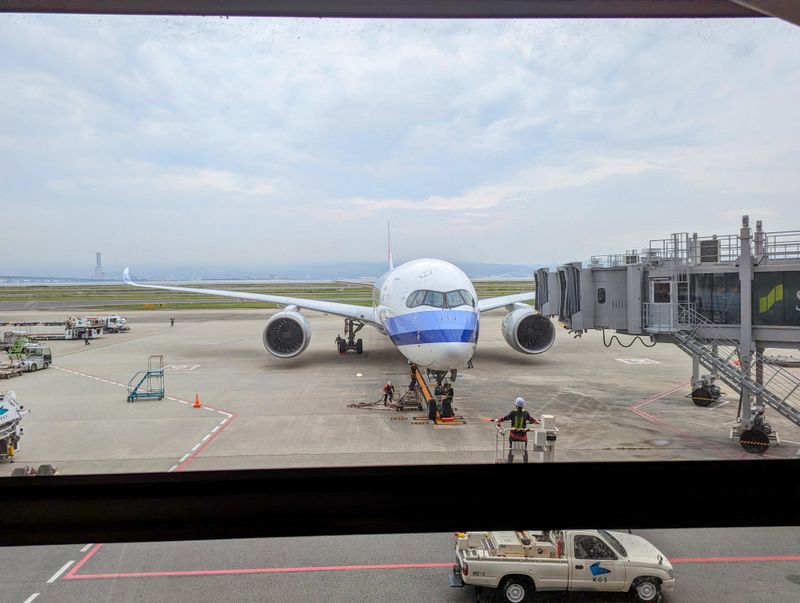
A big thank you to all involved in making our trip to Osaka such a success. As many in our group commented, Japan is the No. 1 place for Taiwanese tourists to visit, and many of our group have enjoyed lots of trips to Japan, but to come on this kind of visit is so meaningful. To visit the Diocese of Osaka, attend their centenary celebrations, visit their churches, meet their bishop and clergy, and receive such a warm welcome, is just so special. We had such a great time! Congratulations to the Diocese of Osaka! Thank you, Bishop Iso and all our friends in Osaka, thank you, Bishop Chang and all our group, and thanks be to Almighty God for his protection, blessings and for our wonderful Taiwan-Osaka Tomoni partnership in Christ! YES! ❤️

 Catherine Lee
Thanks Catherine! So delighted to read this lastest post! Thanks for investing the time in the wonderful account, photos, and sharing your heart for God, Mission, Taiwan & Japan!!
I’m just recovering from a big operation, so won’t get to Taiwan or Japan until much later this year, but reading this I feel like I’ve just had a spiritual, emotional and touristic vacation!!! 🙂 🙂
Good to hear from you, thank you, and rest well! Get in touch if you do decide to come in this direction – welcome!
Absolutely fascinating as always. Had to look up where Osaka is. No escaping the Anglican church’s colonial past. I was quite surprised that you refer to the diocese as a CMS diocese. A lot to ponder on.Sarah x
Thanks Sarah!